Raised Bed Gardening vs In-Ground Gardening: Which Is Better for Home Gardeners?
- What Is Raised Bed Gardening?
- Raised Bed Gardening Benefits
- Which Is Better: Raised Bed or In-Ground Gardening?
For many gardeners who are just starting to grow some crops, will you choose raised bed gardening or in-ground gardening?
Most beginners initially choose to plant directly in the ground, as this method is simpler and more cost-effective. However, in-ground gardening often leads to many issues, such as poor soil quality, inadequate drainage, rampant weeds, and even stunted plant growth or low yields. And after planting for a while, gardeners may find themselves expending a lot of money, energy, and time just to maintain the vegetable patches.
In contrast, raised bed gardening creates a more controllable growing environment and also boosts the success rate of planting and enhances the overall gardening experience. So, what are the differences between these two gardening methods? And which one is better suited for beginners? In the following articles, we will compare them from various perspectives to help you make a more informed decision.
What Is Raised Bed Gardening?

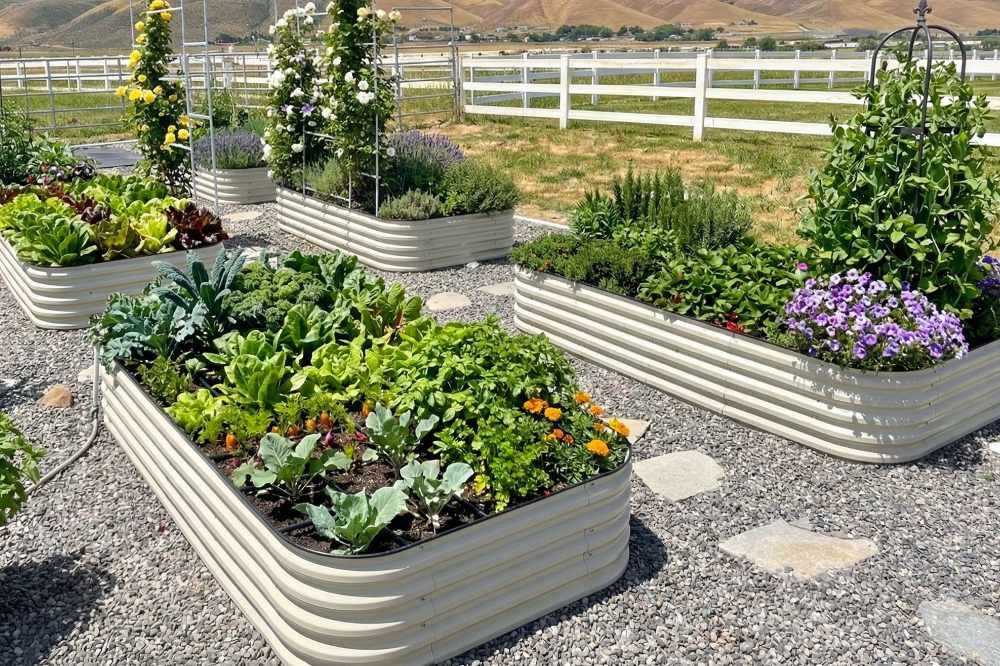
Raised bed gardening refers to a method of growing crops above the ground using wooden or metal planters. Gardeners can fill soil or other organic matter into the planter and build a nutrient environment to cultivate crops. It's a controlled system in which gardeners can freely customize soil composition, improve drainage, and adjust the soil pH levels to meet the specific requirements of different crops.
Compared with raised bed gardening, in-ground gardening involves planting directly into the native soil in the ground. This approach relies on local soil conditions and the natural environment, such as soil structure, fertility, drainage capacity, and climatic factors. These conditions are uncontrollable, and that's why some gardeners can't grow easily or get higher yields.
The distinction is mainly reflected in:
- Raised bed gardening is controllable.
- In-ground gardening relies more heavily on natural conditions.
In in-ground gardening, solving native soil issues like clay, sandy, or compacted soil often requires spending a lot of time and money to amend. In contrast, raised beds can establish an ideal planting environment at the beginning when filling the beds.
Raised Bed Gardening Benefits

1. Why Raised Beds Work in Every Climate and Soil Type
Raised bed gardening has superior adaptability when facing different climatic and soil conditions, and that's a key difference from in-ground gardening.
In terms of soil control, raised beds empower gardeners to take full command of soil structure. Gardeners can decide what materials fill the bed. Gardeners can mix nutrient-rich filler with organic matter, compost, wood chips, or branches to boost fertility. In contrast, the native soil for in-ground gardens relies on the addition of external fertilizers. Moreover, gardeners cannot directly compost within the soil itself, nor can they bury large pieces of wood to decompose.
In terms of drainage, the elevated structure of raised beds naturally facilitates water runoff, providing a more stable growing environment. Even during heavy rainfall, there is no need to worry about water pooling within the raised bed. Conversely, in-ground gardens are more susceptible to the direct impact of weather fluctuations. Heavy or prolonged rainfall can easily lead to waterlogging issues, which in turn cause root rot. One of our social media influencers conducted a comparison at their own farm, planting crops both in raised beds and directly in the ground. As clearly shown in the image below, the plants in the in-ground section were submerged in rainwater, whereas the growth of the plants in the raised beds remained visibly unaffected. Obviously, raised beds are an ideal solution for regions that experience frequent rainfall.

In the weed and pest control aspect, raised bed gardening is also highly recommended. The elevated design of raised beds acts as a barrier, making it difficult for weeds to spread inward from the surrounding area. The volume of weeds found in raised beds is lower than in in-ground gardens. Because the primary sources of weeds in raised beds are typically from bird droppings or weed seeds in the soil mix.
Furthermore, pest issues—particularly those involving rodents—are much easier to monitor and manage in raised beds. During assembly, a layer of stainless steel mesh can be installed to effectively prevent rodents from burrowing into the beds. Instead, in-ground gardens have intertwined root systems and rampant weed growth, making it more difficult to completely remove weeds or eradicate pests. So some gardeners often use chemical pesticides to clean their in-ground garden. As a result, in several respects, raised bed gardening represents a more environmentally friendly approach.
2. Raised Beds Make Gardening Easier for Everyone
Raised bed gardening is suitable for people of various ages and physical conditions.
For the elderly or those suffering from back or knee pain, the elevated design of raised beds efficiently reduces the need to bend over or squat, relieving physical strain.
To meet different needs, VEGEGA offers raised beds in three heights: 11 inches, 17 inches, and 32 inches. The 11-inch bed is ankle-high, ideal for children. The 17-inch bed is knee-calf-high, well-suited for those without back issues who require only minimal bending to work in the bed. The 32-in bed is waist-high, so gardeners do not need to bend over to reach the bed.
Regarding in-ground gardening, it requires frequent digging and bending, having a much higher demand on physical strength.
In conclusion, for beginners, raised beds provide a more controllable and predictable environment. The approach flattens the learning curve and makes it easier to achieve positive results.

11-inch tall raised beds

17-inch tall raised beds

32-inch tall raised beds
3. Raised Beds Are More Cost-Efficient Than In-Ground Gardening
Many people believe that raised bed gardening is more expensive because it requires an upfront investment in materials and soil choice. However, from a long-term perspective, this perception is not entirely accurate.
Raised beds indeed require a certain amount of upfront investment at the beginning. But in-ground gardening often requires continuously purchasing fertilizers, soil amendments, and pest control products to maintain soil health and support plant growth. Over time, these "hidden costs" can exceed the initial investment required for raised beds.
What's more, because raised beds offer a more controllable environment, they boast a higher success rate for cultivation.
A common concern is: Do raised beds require a massive amount of soil, thereby driving up costs?
In reality, it is not necessary to fill the entire bed exclusively with soil. By employing methods such as "Lasagna Gardening" or "Hügelkultur," one can use organic materials (such as branches, fallen leaves, etc.) to fill the bottom layers. In this way, gardeners can reduce the volume of soil required while simultaneously enhancing soil fertility and water retention. For a more scientific filling method, we have an article about Lasagna Garden Bed vs. Hugelkultur Garden Bed: Which One Is Better for Your Garden?
To sum up, raised bed gardening brings higher harvests and also offers distinct advantages in terms of pest and weed control, planting efficiency, and spatial utilization. Additionally, using garden bed accessories like trellises can enhance planting flexibility. Here is an introduction to vertical gardening in metal raised beds.
Which Is Better: Raised Bed or In-Ground Gardening?
If your goal is to start gardening at the lowest possible cost, and you have good native soil conditions, then in-ground gardening remains a viable option. However, if you seek a higher success harvest rate, more consistent yields, and wish to minimize the time spent on soil amendment, weed control, and pest and disease management, then raised-bed gardening is undoubtedly a more efficient and hassle-free solution.
Conclusion
While in-ground gardening may seem like the simpler and more affordable option at first, it often comes with unpredictable challenges, from poor soil quality to drainage issues and ongoing maintenance demands. Conversely, raised bed gardening offers a more controlled, flexible, and beginner-friendly approach, allowing starters to create ideal growing conditions from the very start. If you're looking for a more reliable way to start growing your own food at home, raised bed gardening is a practical investment that continues to pay off season after season.