


How to Grow a Herb Garden in Raised Beds
- How to Plan Your Herb Garden
- Tips for Growing the Best Herbs in Raised Beds
- Common Planning Mistakes to Avoid
Fresh herbs can completely transform everyday cooking, from simple meals to homemade teas and even cocktails. However, store-bought herbs are often expensive, short-lived, and lack consistent flavor. Growing herbs in raised beds offers a more reliable and efficient solution. With better control over soil, drainage, and spacing, it becomes easier to grow healthy herbs in a variety of spaces — whether in a backyard, on a patio, or even near your kitchen. With the right planning and care, a raised bed herb garden can provide a steady supply of fresh herbs throughout the year.
How to Plan Your Herb Garden
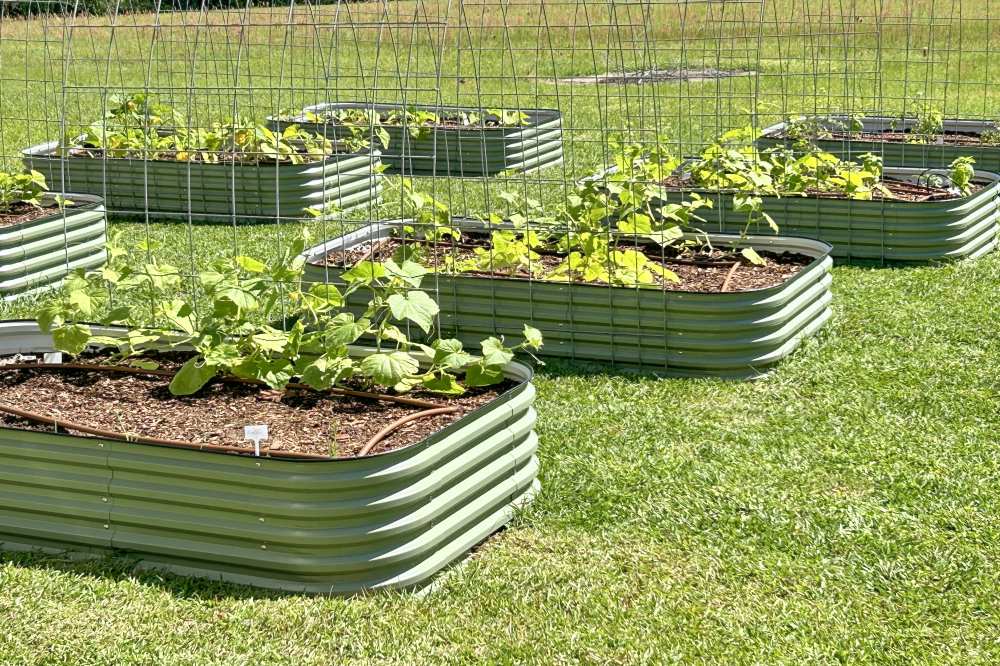
Before starting to plant herbs, planning matters more than the planting itself. A well-structured herb garden can enhance space efficiency and reduce future maintenance expenses. Planning a herb garden should consider three core elements: herb selection, time, and layout. By organizing these elements clearly, you can build a more efficient and sustainable herb garden over time.
Choose the Right Herbs
Different herbs have different growth habits, expansion methods, and care requirements. So, when choosing herbs to grow, we should not only rely on personal preference, but rather plan based on their specific growth characteristics. First, beginners should prioritize varieties that are highly adaptable and low-maintenance, such as oregano, basil, or thyme. These herbs have relatively low soil and moisture requirements, allowing them to thrive consistently in a stable environment. Second, it's best to pay more attention to herbs with aggressive spreading tendencies, such as mint. These plants grow rapidly and spread aggressively underground. If interplanting mints with other herbs, they can easily encroach upon available space and disrupt the overall garden layout. Therefore, it is essential to provide a dedicated planting area for them to keep them under control.
When to Plant Herbs
Most herbs are relatively adaptable, but they still respond differently to seasonal changes. Different herbs exhibit varying responses to seasonal changes. So, scheduling planting times helps improve survival rates and growth efficiency. Generally speaking, the most common herbs are best planted between spring and early summer. Stable temperatures and ample sunlight foster robust root establishment. However, during seasons of extreme heat or cold, planting strategies should be adjusted to suit various environmental conditions. For instance, by adding protective coverings(if you are using raised beds, then a raised garden bed cover is a must-have), relocating herb seedlings, or adjusting watering schedules.
Furthermore, if you are planning for continuous year-round harvests, you should consider management strategies for seasonal transitions (particularly during winter), such as selecting cold-hardy varieties or applying protective measures in advance. This approach of "forward seasonal planning" can help gardeners to achieve a long-term, sustainable herb garden. To help gardeners arrange "forward seasonal planning" in advance, VEGEGA has prepared a USA planting calendar for gardeners to refer to: USA planting calendar.
Smart Layout for Raised Beds

When planting herbs in raised beds, spatial layout directly influences plants' growth status and daily maintenance.
To begin with, consider partition the planting area based on the herbs' growth rates and spreading characteristics. For instance, fast-growing or invasive varieties like mint should be planted in separate garden beds or along the perimeter of the bed to prevent them from encroaching upon or interfering with other herbs.
Besides, different-shaped garden beds can have various planting layout strategies. Taking a round-shaped garden bed as an example, a "center-to-periphery" structure can be adopted: taller herbs or those with a more compact growth habit are planted in the central zone, while lower-growing or easily harvestable varieties are arranged along the outer edge, thereby balancing both aesthetic appeal and practical utility.
In addition, appropriate plant pairing contributes to overall planting efficiency. For instance, grouping herbs with similar water and light requirements simplifies management tasks and reduces operational complexity.
Theme-Based Herb Garden Ideas
Compared to a mere collection of herbs, a themed herb garden offers greater practicality and appeal and is also easier to maintain over time, as we all know that some herbs can repel some insects. So, most gardeners will plant some favorite herbs in their veggie garden.
You can plan different themed herb combinations based on your daily needs:
- Cocktail Garden: Centered around herbs such as mint, basil, and rosemary—perfect for crafting refreshing beverages.
- Italian Garden: Featuring oregano, basil, and parsley—ideal for meeting common culinary requirements.
- Tea Garden: Comprising selections like mint and chamomile—perfect for daily relaxation and enjoyment.
In this way, the herb garden can transform into a functional module that directly enhances your lifestyle.
Tips for Growing the Best Herbs in Raised Beds

After completing the planning of planting a herb garden, steady maintenance becomes the critical factor determining its long-term efficiency and productivity. Instead of in-ground planting environments, a raised bed system offers greater controllability. So, gardeners can easily control the soil conditions, moisture levels, and growth cycles. A thriving herb garden is typically built upon a foundation of healthy soil structure, stable lighting conditions, and judicious pruning and spatial management. Next, let's dive into these details.
Soil & Drainage
Most herbs are generally intolerant of waterlogging. So, in raised bed planting, it's essential to ensure soil looseness and drainage capabilities in beds. It is recommended to use a soil mix rich in organic matter and possessing good aeration to ensure healthy root development while preventing root rot caused by moisture retention. (And we also have an article about the best soil for raised garden beds for your reference.)
Sunlight & Spacing
Most herbs are sun-loving plants, requiring at least six hours of direct sunlight daily. Therefore, when planning the location to place garden beds, priority should be given to choosing locations that receive ample sunlight. Furthermore, in terms of spatial arrangement, gardeners should avoid planting them too densely. Although herbs are relatively small in stature, their foliage and branches will gradually expand as they grow. If the initial spacing is insufficient, it will hinder air circulation and increase the risk of disease. Consequently, leaving adequate space at the time of planting is important for minimizing future maintenance burdens.
Pruning & Growth Control
Regular pruning helps maintain a plant's shape and promotes the growth of new branches, thereby increasing overall yield. For common herbs such as basil and oregano, proper "pinching back" can effectively extend their growing season.For fast-growing herbs (such as mint), a more proactive management strategy is required. By periodically pruning their roots or restricting their growing area, you can prevent them from spreading excessively and encroaching upon the growing space of other plants.
Seasonal Care & Overwintering
If you wish to ensure the long-term viability of your herb garden, the impact of seasonal changes, particularly during colder periods, cannot be overlooked.
Before the onset of the cold season, you can take the following measures to help your herbs successfully overwinter:
- Apply an organic mulch to the soil surface to minimize temperature fluctuations.
- Use a raised garden bed cover to mitigate the effects of frost.
- Reduce watering frequency to prevent waterlogging issues in low-temperature environments.
For herbs planted in raised beds with bottom or movable structures, you can also adjust their location as needed, such as moving them to a patio or a well-lit indoor area, to further enhance their chances of surviving the winter. This flexibility represents a significant advantage of garden bed systems compared to traditional planting methods.
Choose the Right Planter
Beyond the planting methods themselves, selecting the appropriate garden beds or planting containers plays an equally significant role in shaping a herb garden.
For those with limited space or those wishing to garden on a patio, in a courtyard, or even indoors, leak-proof raised beds equipped with bases and wheels are a worthy consideration. Such designs help maintain a tidy environment by preventing direct contact between the soil and the ground, and enhancing drainage efficiency and offering greater flexibility in placement. To meet the different needs of home gardeners, VEGEGA has launched various sizes of leak-proof & self-watering bases for metal raised beds. In this way, gardeners can get a movable raised bed, achieving growing plants on a patio, walkway, and even near the kitchen.
In terms of herb raised bed dimensions, smaller garden beds like 24" wide round beds are well-suited for growing a single type or a small quantity of herbs, whereas round-shaped garden beds are better adapted for zoned planting or thematic groupings. Making a selection based on your actual available space and specific usage requirements can significantly optimize overall efficiency.
Common Planning Mistakes to Avoid

Planting Invasive Herbs Without Control
Mint is a common example. Although it grows rapidly and is frequently used, if it is not partitioned or contained during the initial planting stage, its underground root system can easily spread quickly, encroaching upon the growing space of other herbs. It’s best to grow these herbs separately from the beginning to avoid the additional labor required for frequent layout adjustments later on.
Choosing Deep-Root Plants
When planting herbs in garden beds, it is inadvisable to intercrop them with plants that possess deep root systems—such as potatoes, sweet potatoes, or beets. If these types of plants are mixed with shallow-rooted herbs, it will not only hinder the development of the herbs' root systems but may also lead to an uneven distribution of soil nutrients. When designing a herb garden layout, priority should be given to selecting plants with shallow root systems and flexible growth cycles to ensure the overall stability of the planting system.
Overcrowding
Avoid planting herbs too densely in an attempt to maximize space. At the beginning, the garden bed may appear compact and full, but as the herbs grow, ventilation and light conditions deteriorate rapidly, increasing the risk of pests and diseases. The wise approach is to leave ample growing space during planting, ensuring that the plants can maintain a healthy structure and condition even as they reach maturity.
Conclusion
Creating a sustainable herb garden involves far more than simply selecting which plants to grow. It requires detailed planning, thoughtful layout decisions, and consistent, ongoing maintenance. Utilizing raised beds for your herbs allows you to exercise greater control over soil conditions, plant spacing, and seasonal adjustments, thereby making the entire cultivation process easier to manage. With the right approach, even a confined space can be transformed into a bountiful and enduring herb garden. Ultimately, a thoughtfully designed herb garden is not merely about growing plants. It becomes an integral part of your lifestyle, adding endless delight to your daily life.


