How to Winterize Raised Garden Beds
Last Updated: October 29, 2026 by Vegega Team
To winterize raised garden beds, remove finished and diseased plants, clear weeds and debris, replenish settled soil with compost or organic matter, and cover bare soil with mulch or an appropriate cover crop. Inspect the bed and irrigation before freezing weather, while protecting any crops you plan to keep growing through winter.
- Clean Up the Metal Raised Bed—but Don’t Remove Everything
- Rebuild the Raised Bed Soil Before Winter
- Cover and Protect Raised Bed Soil Through Winter
- Frequency FAQs
After the last batch of tomatoes, peppers, or other summer crops is collected, metal raised garden beds can easily enter a state that seems to be over. The plants stopped growing, the fallen leaves began to accumulate, and the soil surface gradually emptied out. The easiest way is to do nothing and clean it up when it's time to plant next spring.
But this often delays fall gardening tasks until next season. Residual diseased plants, seed-bearing weeds, and plant debris scattered in the garden bed may remain until winter, while the exposed soil will experience months of rain, snow, wind, and freeze-thaw cycles. In the spring, what you face is not just replanting but taking the time to clean up old crops, restore the soil, and then re-prepare the growing space.
Therefore, the purpose of winterizing raised garden beds is not to completely empty the beds, let alone change the soil again every year, but to protect the growing environment that has been established this season and let it enter winter in a better state.
The whole process can be simply understood as three stages. First, clean up the things that should not remain in the raised bed, then restore the soil that was used for a growing season, and finally cover and protect the soil surface. After doing these tasks well, the raised bed is ready to rest for the winter, rather than leaving all maintenance tasks to the spring.
Clean Up the Metal Raised Bed—but Don’t Remove Everything

Before buying seeds or preparing seedlings, determine where the plants will eventually grow. Whether a location can become a suitable vegetable garden depends on sunlight, drainage, available growing space, and whether the crops you plan to grow are suitable for this environment.
Remove Finished, Diseased, and Pest-Damaged Plants
Clean up annual vegetables that have withered or finished harvesting first, especially plants with obvious disease or severe pest damage. Dead plants stay in the raised bed for a long time, which may provide overwintering opportunities for some pests and diseases, so fall cleanup is an important step in reducing these residual problems.
However, when dealing with these plants, you need to assess their condition. Healthy plants can be used for a compost system. (Compost for Raised Garden Beds: How to Make, Use, and Apply It the Right Way) Residues with obvious disease spots, decay, or serious pests are not suitable for reburying into the raised bed for composting. Otherwise, it should have some potential problems that may be reserved for the next season.
At the same time, remove the seeds that have already been sown. Although winter will temporarily slow down the growth, it will not automatically solve the weed seeds. It is easier to deal with it now than to wait until the soil warms up in the spring and then face a new round of weeds.
Don’t Automatically Pull Out Every Root
The end of the growth of plants above the ground does not mean that all the underground parts must also be dug out. If the plant is healthy and there is no obvious soil-borne disease or serious pest problem, there is no need to flip the entire soil profile repeatedly. Excessive soil overturning itself will disturb the already formed soil structure, and some small, healthy roots will gradually decompose after remaining in the soil and become part of soil organic matter. The situation that needs to be completely removed is when the roots of the plant have already shown signs of decay and disease.
Clean the Bed Without Overdoing It
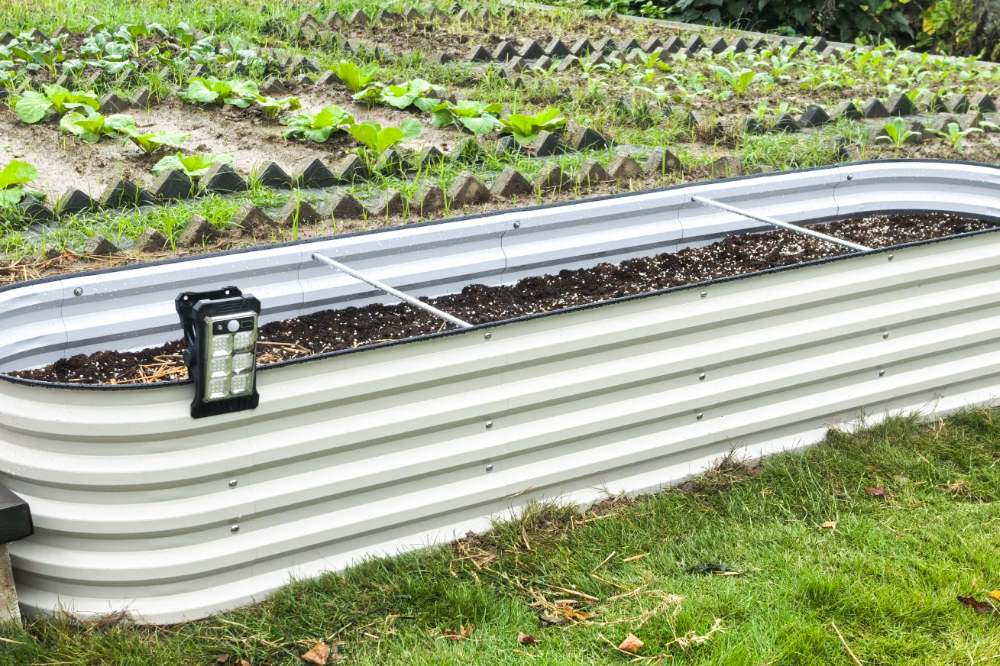
After the plants and weeds are processed, you can clean up the soil, fallen leaves, and other debris accumulated around the raised bed and on the bed edges. For metal raised beds, there is usually no need to disassemble the entire bed for the winter. Clean up the obvious dirt and residues on the outside, and check the panels and connections that need to be addressed at the same time.
Rebuild the Raised Bed Soil Before Winter

After cleaning up the metal raised bed in winter, you may find that the soil is no longer as high as it was filled in spring. Especially when using organic matter such as compost, leaves, wood material, etc., it is common for a certain degree of soil settling to occur after a growing season. Plant growth will consume some nutrients, and organic materials will continue to decompose and shrink in size. What winterizing really has to do with at this stage is to judge what needs to be added to the planting layer.
Top Up Settled Soil Instead of Replacing It
If the soil level drops slightly, there is usually no need to replace all the soil. You can add soil mix or mature compost as a supplement to restore the upper zone in the bed to the appropriate planting height.
For deeper metal raised beds that have been used for a long time, soil settling may be more obvious. If only the topsoil were reduced, the focus would be on restoring the upper growing layer. If biodegradable fillers such as branches and leaves sink significantly after decomposition, you can consider supplementing the internal organic matter first and then adding the soil layer above for plant root growth.
Add Compost and Organic Matter Where the Soil Needs It
Autumn is a suitable time to supplement organic matter, but it is not that the more, the better. Adding a layer of finished compost to the cleaned soil surface can replenish organic matter and improve the soil state after a season of planting.
But compost, organic matter, and fertilizer should not be regarded as the same thing. Compost is more suitable for maintaining soil structure and organic matter. Fertilizer is mainly aimed at specific nutrient needs. If the plant grows normally this season, and there is no soil test indicating that specific nutrients need to be supplemented, then you don't have to add a large amount of fertilizer.
Kitchen scraps, unripe garden waste, or a lot of fresh organic materials are not simply finished compost. Many gardeners will take advantage of the opportunity of autumn to directly bury these materials in the metal raised bed (at least a 17” or taller bed), and after a winter of fermentation, it can also become a mature vegetable bed.
Cover and Protect Raised Bed Soil Through Winter

After completing the soil adjustment, the raised bed is not suitable for being left bare until spring, cause the soil surface will directly face winter rain, snow, wind, and repeated freezing and thawing. The final step of winterizing a raised bed is to establish protection for the growing layer that has been sorted out.
However, covering a raised bed is not about sealing the entire bed with a tarp or plastic. For vegetable beds that have ended planting, it is more important to cover the soil surface, and mulch and cover crops are two common but different methods.
If the raised bed will not grow crops throughout the winter, covering it with a layer of organic mulch is the most direct choice. Materials such as straw, shredded leaves, pine needles, etc. can reduce the soil directly exposed to winter weather while reducing the erosion of the surface soil by heavy rain and inhibiting the premature appearance of weeds when the weather warms up.
The mulch is not to be piled as thick as possible but to form a relatively uniform mulch layer. If perennial plants, garlic, or other overwintering crops are still retained in the raised bed, flipping it every week can ensure that the heavy, wet mulch will not cling to the stems for a long time.
Cover crop is another way to protect the soil surface, but it is not suitable for all winterizing time points. If you start preparing raised beds in early fall, you can choose a cover crop that is suitable for the local climate. Its role is not just to cover the bare soil, the root system can also help maintain the soil structure during growth.
In addition, you can also use the raised bed cover to help the cold-resistant plants grow through this winter more easily. But if you have already entered late fall, especially after frost is approaching and the temperature drops significantly, you don't need to sow a cover crop.
Frequency FAQs
Should I Cover My Raised Garden Beds for Winter?
It is recommended to protect the exposed raised bed soil. The three options of organic mulch, hardy cover crops, or raised bed cover can be used for overwintering raised beds in different situations. No matter which one you choose, you should consider drainage and ventilation.
Should I Remove All Plants From Raised Beds Before Winter?
No need. Annual crops that have ended their growth and some diseased plants should be dealt with in a timely manner. Cold-season crops, garlic, or hardy plants that are still growing can remain in the bed.
Should I Add Compost to Raised Beds in Fall or Spring?
Either time works. Fall adds finished compost to supplement organic matter to prepare for the next season in advance. Spring is more suitable for making final adjustments based on the crops to be planted.
Do I Need to Replace Raised Bed Soil Every Year?
No. Raised bed soil sinks after a growing season because of the soil composition, organic matter, root growth, and gradual sedimentation. In most cases, top up the soil with supplemental compost or other suitable organic matter according to the actual situation.
Do Metal Raised Garden Beds Need Special Winter Care?
Metal raised garden beds can usually be left in place for the winter and do not need to be disassembled. Before the arrival of winter, you can remove the plant debris accumulated around the beds, check whether the connections, edges, and drainage are normal, and perform simple cleaning as needed.
Conclusion
Winterizing a raised garden bed is not about restoring the garden to a blank space, but about preserving the soil structure and growing environment established in this season. Cleaning up the plants, replenishing the soil, and covering the exposed raised bed soil are the three important parts of winterizing the bed. When spring planting starts again, you will have a complete raised bed for the new season's crops.