The Perfect Width & Shape for Metal Raised Garden Beds
Last Updated: May 15, 2026 by Vegega Team
The most suitable width of the metal raised garden bed depends on your operational range, garden space, and planting needs. The 2 ft width is suitable for a patio, small space, and single-sided maintenance, while 4 ft is usually considered the practical standard width for a family vegetable garden. Meanwhile, rectangular, round, oval, and modular shapes are also ideal for different garden layouts and planting styles.
- What Really Determines the “Perfect” Raised Bed?
- Choosing the Right Width
- Choosing the Right Shape
- Matching Raised Beds for Your Space
When choosing metal raised garden beds, some people only focus on length or price, but those are only part of the decision. Many factors affect your daily watering, weeding, and harvesting experience. There are three factors you may easily ignore: width, shape, and height. Choosing the wrong size can make the middle of the bed difficult to reach and reduce space utilization, making late watering, harvesting, and daily maintenance troublesome. This article will help you find the width and shape of the raised bed that best suits you according to your garden space, planting needs, and usage habits.
What Really Determines the “Perfect” Raised Bed?

The combination of width, shape, and height has a major impact on your everyday gardening experience. Among them, the width determines “whether it's easy to operate." If the bed is too wide, it is difficult for you to reach the middle area, and later weeding, pruning, and harvesting will become troublesome. Therefore, the width of most raised beds will be controlled within the natural reach of the human body.
Shape affects how efficiently you use your garden space and the garden layout. For example, rectangular beds are more suitable for efficient planting and expansion, while round or oval beds are more decorative and visually appealing.
As for the height, it affects the comfort of gardening. A higher bed reduces bending down. It's more convenient for gardeners who want to easily maintain the bed.
So before choosing a raised bed, it helps to ask yourself a few simple questions:
- How much growing space do you actually have?
- Will you access the bed from one side or both?
- What are you planning to grow most often?
These problems often directly affect whether you are more suitable for narrow beds, standard 4 ft layouts, or more decorative garden shapes. For choosing a raised bed quickly, here is a concise guide about how to choose.
Choosing the Right Width

Generally speaking, the metal raised bed width will directly affect whether the later maintenance is easy. If the bed is too narrow, it will limit the planting space. But if it is too wide, it will make the middle area difficult to reach. Therefore, when selecting the right width, the most important thing is not “how many plants can be cultivated", but whether you can easily maintain the entire garden bed.
Narrow Beds (2 ft)
The 2 ft raised beds are ideal for patios, small spaces, or layouts placed against walls and fences. This width allows you to reach every area easily from one side — without ever stepping into the soil. Besides, this size works especially well for frequently harvested plants like herbs, leafy greens, and strawberries. It's also great for growing tomatoes, beans, or other vertical plants with a trellis.


Medium Width Beds (4 ft)
For most backyard vegetable gardens, 4 ft is the most balanced and practical width. It allows you to work from both sides, so you can reach the entire bed easily while maximizing planting space. Whether you're growing tomatoes, peppers, cucumbers, or a mixed vegetable garden, 4 ft beds are simple to plan and maintain.
Compared to narrower 2 ft beds, the 4 ft width also works better for companion planting, crop rotation, and spreading plants like winter squash or broccoli. And you still get a comfortable, easy-to-maintain setup. That's why 4 ft raised beds have long been the standard width for home vegetable gardens.


Choosing the Right Shape

In addition to the width, the raised bed shape will also affect the experience and spatial layout of the entire garden. Different shapes are designed for different planting styles, which also change the overall visual style.
Oval Beds
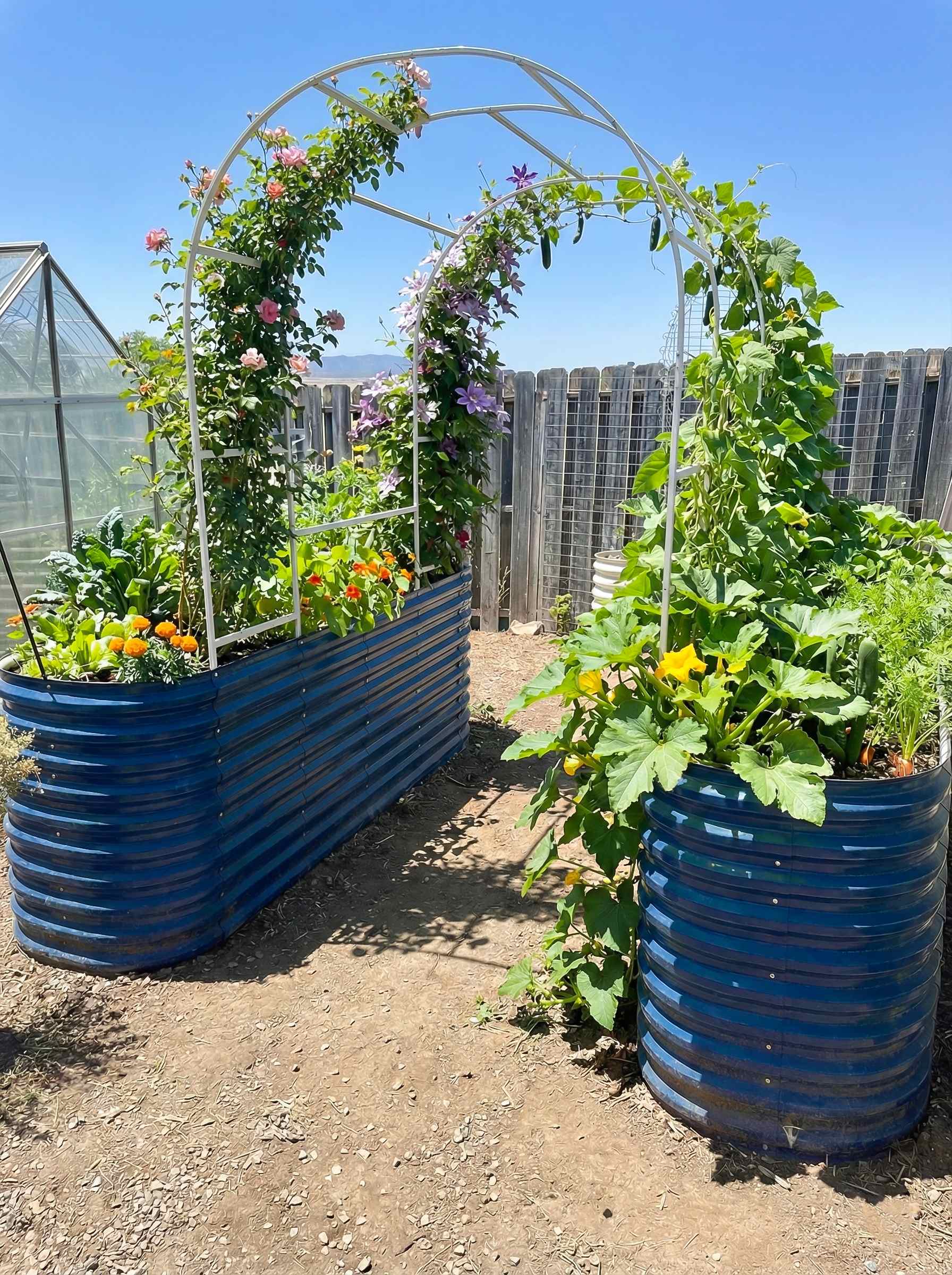
Oval beds offer a clean, modern look. Compared to round beds, they make better use of space. Compared to rectangle raised beds, they are softer and more natural. That's why they work so well in modern backyards, front yards, or decorative gardens. If you want practicality without sacrificing style, oval beds are hard to beat.
Round Beds
Round beds are all about visual impact. They naturally become the centerpiece of your garden. Plant herbs, flowers, or a single statement plant — round beds shine as accents on patios, front porches, or in decorative corners. They're not about maximum yield. They're about creating a relaxed, inviting atmosphere.
Rectangular Beds
Rectangular beds are the classic for a reason: they just work. This shape is the easiest to arrange, expand, and fit with irrigation systems or multiple garden rows. For family vegetable gardens focused on maximum harvest, rectangular beds are the most practical choice. Plus, their straight-forward structure makes it simple to add more beds or rearrange your layout later.
Modular & Special Shapes
For irregular spaces or gardeners who like to change things up, modular designs offer real flexibility. They adapt easily to corners, side yards, or layouts that evolve over time — and you can always add more sections as your needs grow. Whether you want an L-shape, long rows, or a completely custom setup, modular beds let you use every inch of your space.
Matching Raised Beds for Your Space

The best raised bed setup depends not only on size, but also on how you plan to use your growing space. A layout that works perfectly in a large backyard may feel crowded on a small patio, while decorative gardens often prioritize appearance over maximum planting capacity.
Best Raised Beds for Backyard Vegetable Gardens
For most backyard vegetable gardens, 4 ft wide beds remain one of the most practical choices. They provide enough growing space while still allowing comfortable access from both sides. Paired with oval, rectangular, or modular layouts, they also make it easier to organize walkways, irrigation systems, and future expansion.
Best Raised Beds for Patios & Small Spaces
In patios, balconies, or compact gardens, narrower beds are usually easier to manage. A 2 ft width works especially well for one-sided access and helps prevent smaller spaces from feeling overcrowded. Oval, round, or modular shapes can also make limited outdoor areas feel more flexible and visually open. Besides, VEGEGA also provides some waterproof bases for metal raised beds, which are flexible for placing in patios or walkways.
Best Shapes for Decorative Gardens
If visual design matters just as much as planting space, round and oval beds often work better than traditional rectangular layouts.These shapes naturally create softer lines and stronger focal points, making them ideal for front yards, walkway entrances, patios, or decorative garden corners.
Best Raised Bed Heights for Comfortable Gardening
Height can make just as much difference as width and shape — especially for long-term gardening comfort. 11" raised beds are the beginner height and often a good starting point for herbs, flowers, or beginner-friendly kitchen gardens. 17" beds provide a more comfortable working height for daily vegetable gardening and are easier to maintain over longer periods, especially when paired with a small gardening stool. For gardeners who want to reduce bending as much as possible, 32" raised beds offer a more ergonomic setup. The taller working height makes watering, harvesting, and pruning noticeably easier, especially for elderly gardeners or anyone looking for a more comfortable gardening experience.


However, in addition to the size of the raised bed itself, the spacing between the beds will also affect the experience of the entire garden layout.
Don’t Forget Walkway Space Between Raised Beds
If the distance between the beds is too narrow, later watering, pruning, harvesting, and even simple turning around will become inconvenient. Reasonable walkway spacing can improve gardening comfort and affect gardening efficiency. Generally speaking, about 18" can be used as the minimum passage space. If you want to get a more comfortable space to move and squat down, 24" will be more practical. For larger layouts that require wheelbarrows, garden carts, or main channels, 30-36" is often more appropriate. For larger backyard layouts, planning walkway spacing will also make it easier to expand raised beds later.
If you want to know more about raised bed spacing and walkway planning, you can also refer to our complete guide: How Much Space Should You Leave between Raised Beds?
Still not sure which raised bed fits your space?
Quick Raised Bed Selection Table
| If You Want | Best Width | Best Shape | Best Height |
|---|---|---|---|
| Maximum harvest | 4 ft | Oval/ Rectangular/ Special | 17"/ 32" |
| Small patio garden | 2 ft | Round/ Modular | 11" |
| Decorative front yard | 2–4 ft | Round / Oval/ Special | 17"/ 32" |
| Easier everyday gardening | 4 ft | Oval/ Modular | 17"/ 32" |
| Senior / less bending | 4 ft | Oval/ Modular | 32" |
Conclusion
When choosing a metal raised bed, there's no one-size-fits-all solution. The right bed is the one that fits your space, your planting habits, and how you like to garden. For backyard gardens focused on maximum harvest, 4 ft rectangular beds remain the classic, practical choice. Patios, small spaces, and decorative gardens often work better with compact, round, or oval layouts. Plan your width, shape, and layout in advance, and it makes everything easier down the road, from daily watering to seasonal maintenance. Whether you're new to gardening or redesigning an existing space, finding the setup that truly fits your space and gardening style matters far more than simply choosing the biggest bed available. A well-chosen raised bed with the right width, shape, and height makes gardening easier, more enjoyable, and something you'll stick with for years.