How to Fill, Water, and Fertilize Raised Garden Beds
To fill, water, and fertilize a raised bed properly, start by building a well-draining, nutrient-rich soil foundation. Water deeply and consistently based on weather and plant needs, rather than on a fixed schedule. Apply fertilizer at key growth stages using balanced or organic options. Most importantly, manage water and nutrients together, as they directly affect how well plants can absorb what they need.
- Building the Right Soil Foundation for Raised Beds
- How to Water Raised Garden Beds the Right Way
- How to Fertilize Raised Beds for Maximum Growth
- How Watering and Fertilizing Work Together in Metal Raised Garden Beds
In raised bed gardening, some gardeners may consider “watering” and “fertilizing” as two independent management tasks: replenishing water when there is a shortage of water and adding fertilizer when the growth is slow. But in fact, plant growth is not determined by a single factor but is driven by an interactive system.
Water is not just a medium for maintaining soil moisture but also a key carrier for nutrient conversion and transportation. The nutrients in the soil need to be dissolved under the action of water before they can be absorbed and utilized by the root system. Once water management is unbalanced, this process will be broken. Excessive watering will cause nutrients to be lost with the water, while insufficient watering will limit the efficiency of the root system's absorption of existing nutrients.
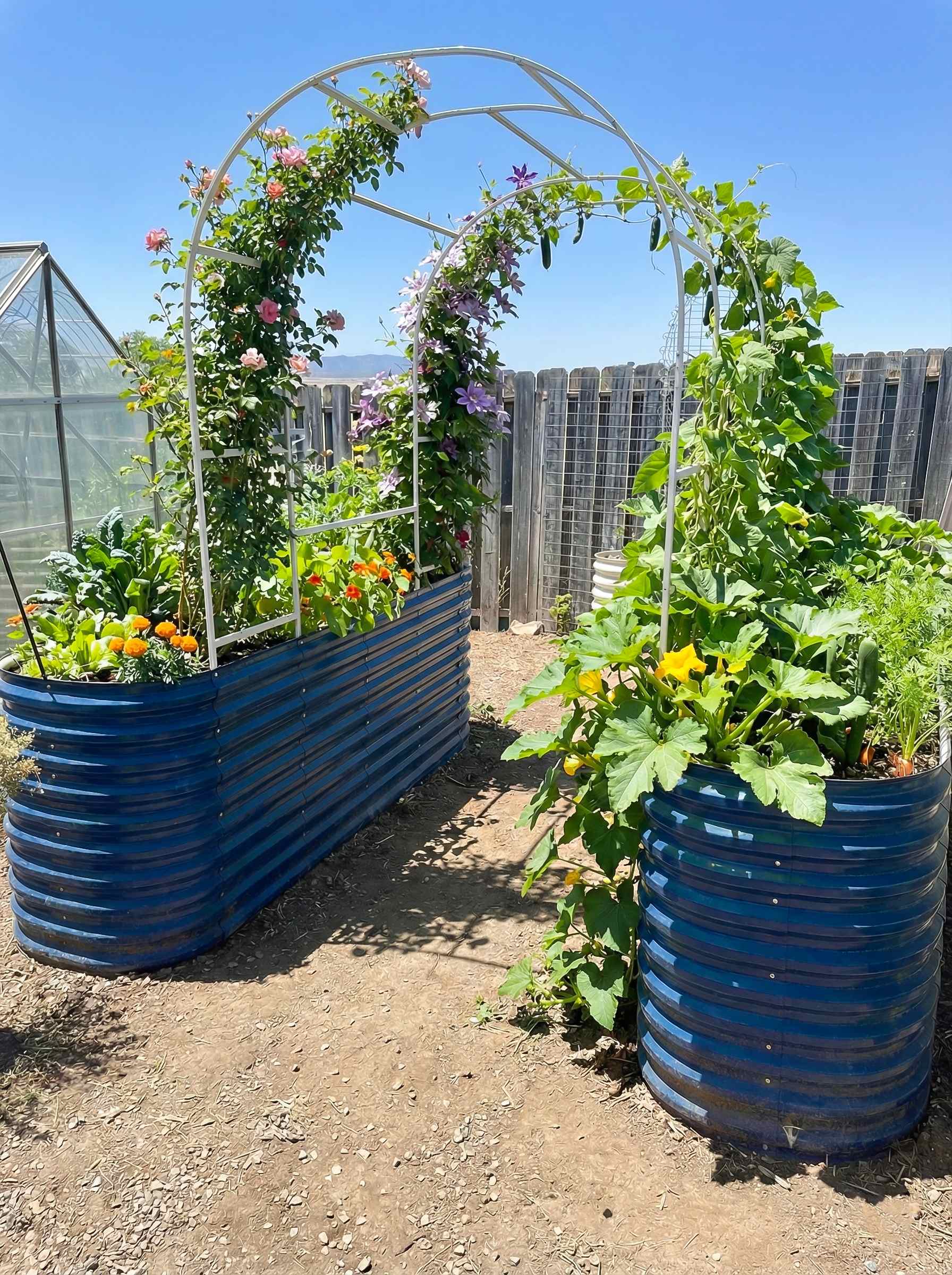
This "water-nutrient relationship" is more obvious in metal raised garden beds. Compared with the in-ground planting, raised beds have better drainage and higher ventilation. While improving plant growth efficiency, these characteristics also amplify the linkage between watering and fertilization. Influence.
Therefore, a healthy raised bed system is not just about “what is added" but how you manage the balance between water and nutrients. This article will sort out the core management methods of raised beds from soil filling, watering, and fertilization to help you establish a stable, efficient, and sustainable planting environment.
Building the Right Soil Foundation for Raised Beds

A healthy raised bed begins with the correct soil foundation. If the soil structure is terrible, even if the watering and fertilization are done finely in the later stage, it will be difficult to obtain the ideal planting effect.
The ideal garden bed soil should have three key characteristics: excellent drainage, sufficient organic matter, and stable nutrient supply capacity. Drainage determines whether excess water can be discharged in time; organic matter helps to enhance the soil structure and achieve a balance between water retention and ventilation; and the nutrient base directly affects the plant growth.
Unlike the ground-planting environment, the soil in a bed is completely artificially constructed, which also means that you can more accurately control the soil structure and nutrient composition. If you are not sure how to match the soil, there are efficient solutions for different layered filling methods. For example, Lasagna beds (layered composting method) use organic materials to be added layer by layer and gradually transformed into a nutrient-rich planting medium; Hugelkultur beds (wood filling method) use the slow decomposition of wood materials to provide long-term water retention and nutrient release effects.
By rationally constructing the soil foundation, it can improve the efficiency of moisture management and make subsequent fertilization more stable and efficient.
How to Water Raised Garden Beds the Right Way

The correct watering method is the basis for maintaining the stability of the soil system.
In the management of raised beds, watering is often the easiest part to treat mistakenly. Some gardeners are used to watering a small amount every day, while others wait until the soil is completely dry before replenishing water at once. But whether excessive or insufficient, it will have a continuous negative impact on plant growth.
For the question of how often you should water a raised garden bed, there is no fixed watering frequency, but it depends on climatic conditions, soil structure, and the type of crops grown.
Key factors that affect the frequency of watering include the following:
- Soil structure: loose soil drains water faster.
- Plant type: shallow-root vs. deep-root plant
- Raised bed location: direct sunlight or shade
- Temperature and weather conditions: high temperatures and dry environments lead to faster evaporation.
In the hot summer when the temperature is higher, the rate of water loss is accelerated, and more frequent hydration is usually required. While in a mild or humid environment, the watering frequency should be appropriately reduced to avoid the soil being too wet for a long time.
From the point of view of time, early morning is the most ideal watering time. At this time, the temperature is low, and the water evaporates slowly, so plants can make full use of the water to grow during the day. If watering at high noon, it has a low utilization rate and may cause additional pressure on the plant root system, even a risk of rotten roots.
In addition, compared with frequent surface watering, it is more recommended to use “deep watering” to allow water to slowly penetrate to the roots. This method can promote the downward growth of the root system, improve the drought resistance of plants, and also reduce the evaporation loss caused by shallow wetting. This is why many gardeners consider using drip irrigation systems.
By the way, if there is a shortage in watering management, plants usually show it through some intuitive signals. For example, yellowing of leaves, root rot, etc., may be the result of improper watering.
How to Fertilize Raised Beds for Maximum Growth

A reasonable fertilization strategy determines whether plants can continue to grow healthily.
In addition to moisture management, nutrient supply is also a key factor affecting plant growth performance. Even if the watering method is reasonable, if there is a lack of available nutrients in the soil, it's still difficult for plants to achieve healthy growth.
First, time node. Before planting, supplementing the soil with basic nutrients can provide a stable starting point for subsequent growth. To save some time, gardeners can also choose to add fertilizers when filling the raised beds. Second, during the plant growth period, supplement nutrients promptly according to the plant's growth. This can help maintain continuous growth momentum.
In terms of fertilizer selection, common fertilizer types can be roughly divided into the following:
- Natural organic fertilizers: such as compost and rotting organic matter, improve soil structure and release nutrients for a long time.
- Inorganic fertilizer: quick effect, but the amount needs to be controlled.
- Natural slow-release fertilizer, suitable for a stable supply
- Natural liquid fertilizer, suitable for quick replenishment
Common organic fertilizers and inorganic fertilizers have their own characteristics. Organic fertilizers are released slowly, which is more conducive to improving soil structure. In contrast, inorganic fertilizers are more effective, but the amount needs to be controlled. At the same time, slow-release fertilizers are suitable for long-term stable supply, while liquid fertilizers are more suitable for rapid replenishment.
Aside from conventional fertilizers, the use of kitchen waste or compost to provide nutrients to the soil (here is a guide on the conversion of food waste into nutrients: Composting Made Easy: Turning Kitchen Scraps into Nutrient-Rich Soil) is a more sustainable choice.) This kind of natural source can reduce waste and also help build a healthier soil ecosystem. By the way, if your raised bed is above 17" tall, then you can directly compost in the bed.
Moreover, it should be noted that the common problem in the fertilization process is usually not "insufficient fertilization" but "improper fertilization." Excessive fertilization, wrong timing of fertilization, or an unbalanced nutrient ratio can cause a burden on plants and even affect root health.
In addition, covering the surface of the soil with a layer of mulch can effectively reduce water evaporation and nutrient loss, and the continuous addition of compost can provide the soil with a long-term and stable source of nutrients. These measures can be combined with fertilization strategies to make nutrient management more efficient.
How Watering and Fertilizing Work Together in Metal Raised Garden Beds

In raised garden beds, the relationship between water and nutrients becomes closer and more sensitive.
In the actual planting process, watering and fertilization are not independent of each other but work together in the same soil system. Water not only participates in the nutrient dissolution process but also directly affects the nutrient absorption efficiency of the root system. Once water management is unbalanced, nutrient utilization will also decrease.
When there is too much watering, the dissolved nutrients are easily lost with the water, resulting in a decrease in soil fertility. And in the case of insufficient water, even if the soil still contains nutrients, it is difficult for the plant roots to absorb them effectively. This ”water—nutrient" linkage relationship determines that the two must be managed at the same time, rather than adjusted separately.
In metal garden beds, this relationship will be further magnified. Its main manifestations are:
- Faster drainage: faster utilization of water and nutrients.
- Better ventilation: soil microorganisms are active, and nutrient circulation is accelerated.
- The soil warms up faster: the growth rate of plants is accelerated, and the demand for water and fertilizer is higher.
Due to its stronger drainage performance, excess water is more likely to be lost. At the same time, good ventilation will speed up the nutrient circulation inside the soil, and faster soil warming will also increase the metabolic rate of plants, thereby increasing the demand for water and nutrients. This means that maintaining stable soil moisture in garden beds has become more critical, especially in high-temperature or dry environments.
In order to simplify garden bed management and reduce nutrient loss because of the moisture fluctuations, some gardeners use a self-watering base for metal raised beds to maintain the relative stability of soil moisture. This kind of method can reduce daily maintenance costs while making the synergy between moisture and nutrients more controllable.
Conclusion
The secret of successful raised bed gardening is the synergistic relationship between soil, moisture, and nutrients.
From the construction of the soil foundation, watering methods, to the formulation of fertilization strategies, every process jointly affects the stability of the garden bed system. Once a certain part of it is unbalanced, it often has a knock-on effect on the overall planting performance.
Raised garden beds provide planters with higher controllability than in-ground planting; meanwhile, they also put forward finer requirements on fillers, watering, and fertilizing.
Only under the premise of understanding how water and nutrients interact can they truly give full play to their advantages and achieve stable and efficient planting results. If you have more gardening problems that need to be solved, please feel free to contact support@vegega.com. We'll be here for you.