How to Cover Raised Garden Beds for Winter
Even if you don’t plan to grow anything during winter, knowing how to cover raised garden beds for winter is essential for protecting soil health and reducing weed problems. Whether you're using metal raised garden beds or traditional wooden ones, covering your raised beds helps insulate the soil prevent erosion and keep beneficial microbes active in the winter. Common covers include organic mulch(like leaves, straw, or wood chips) and inorganic mulch (like plastic landscape trap, landscape fabric, rubber mulch, or reflective metallic mulch).
In this guide, we’ll walk you through the best methods to winterize your raised beds with efficient method.
Why Cover Raised Garden Beds for Winter

Winterizing raised beds by covering them with mulch is just an optional step, because that is one of the easiest ways to maintain healthy soil over the winter. Winter rain, snow, and freezing temperatures can cause damage to the exposed soil. A protective cover keeps the soil from compacting, suppresses weeds, and prevents overwintering pests from settling in. By protecting your raised bed over winter, you can easily maintain a healthier raised bed in the next growing season.
What Happens If You Leave Raised Beds Uncovered

Leaving raised beds uncovered through winter can slowly degrade soil quality. Common issues include:
- Soil Compaction from Freeze–Thaw: Moist soil freezes, expands, and contracts repeatedly, creating dense, clumpy soil that restricts root growth. Weed and pest problems.
- Nutrient and Topsoil Loss: Heavy rain and snow can wash away valuable topsoil, leaving beds depleted by spring.
- Weed and Pest Growth: Some weed seeds germinate even in cold conditions, while exposed soil can shelter insect eggs and larvae.
- More Spring Work: Gardeners often need to loosen compacted soil, remove weeds, and rebuild fertility before planting.
Over time, these issues compound, making winter protection a smart preventative step.
Best Materials to Cover Raised Beds for Winter

Choosing the right raised bed winter cover material depends on your climate and whether you want organic protection, a synthetic cover, or a combination of both. Here are some suggestions for material choice.
1. Organic Options (Natural Winter Mulch for Raised Beds)
Organic mulch is the most popular choice because it protects soil and improves it as it breaks down. Here's the common mulch for raised beds:
- Straw or hay – light, insulating, great for cold climates.
- Shredded leaves – free and effective, excellent moisture retention
- Compost – adds nutrients; ideal as a top dressing before applying mulch
- Wood chips – protect soil long-term but decompose slowly
Organic mulches are ideal for gardeners focused on long-term soil health.
2. Inorganic Options (Synthetic Option)
Inorganic covers create a physical barrier between soil and winter weather. They don’t improve soil quality, but they are durable and effective in harsh conditions. Popular choices include:
- Garden fabric (frost cloth) – breathable, lightweight
- Plastic sheet (PE cover) – excellent moisture barrier; best used with ventilation
- Tarp – durable and simple for large beds
These materials work best in areas with heavy rainfall or snow.
3. Combination Setup
For the best protection, many gardeners combine both approaches. A layer of compost or leaf mulch can be topped with a frost cloth or PE cover. This method insulates soil, prevents erosion, and minimizes weed germination—making it one of the most effective ways to winterize metal raised garden beds.
Step-by-Step: How to Cover Raised Garden Beds for Winter

Step 1: Remove Old Plant Debris
Remove dead plants, roots, and fallen foliage to prevent diseases and pests from overwintering.
Step 2: Loosen and Enrich the Soil
Lightly aerate the top layer and mix in compost. This adds nutrients and helps rebalance soil structure.
Step 3: Water the Garden Bed
Slight moisture helps soil microbes stay active longer into the season. If your area doesn’t receive much winter rainfall, it’s best to water the raised beds occasionally. This keeps the soil from drying out and prevents winter desiccation.
Step 4: Add a Mulch Layer
Apply 2–4 inches of winter mulch on top of the bed. You can use organic mulch—such as straw, shredded leaves, or compost (read more about organic mulch for raised beds)—to insulate and protect the soil.
Step 5: Install the Winter Cover
Use a frost cloth, tarp, or plastic sheet to cover the top of the bed. Secure the cover with bricks or landscape pins to prevent it from being lifted by strong winter winds.
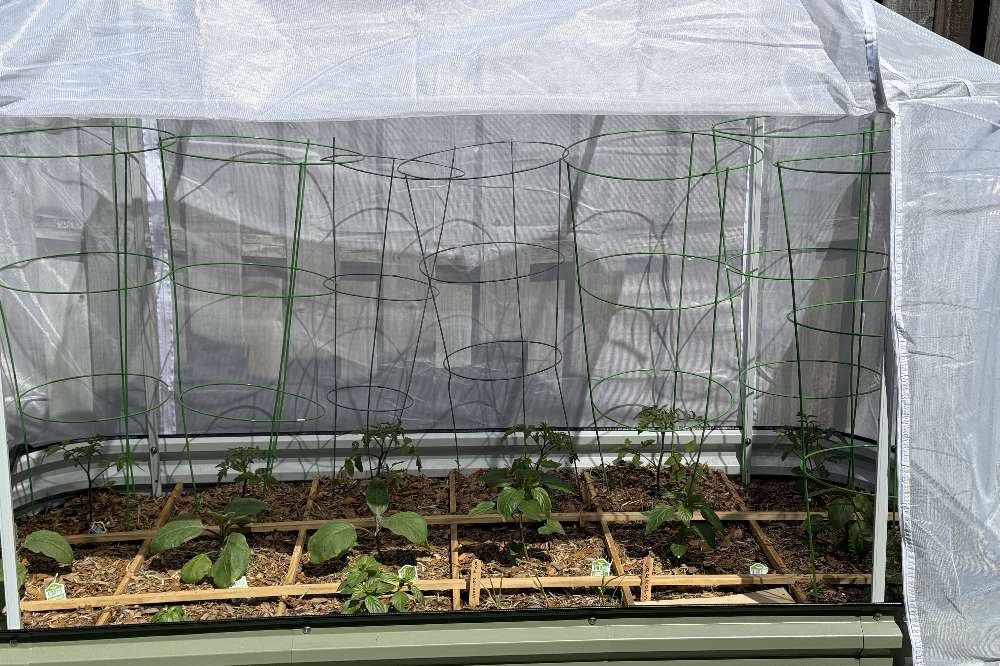
Suppose you prefer a more reliable and convenient option. In that case, Vegega offers a raised garden bed cover that includes a Net cover + PE cover—providing dual-layer protection against frost, wind, and winter pests.
Step 6: Check Drainage
Ensure water can flow away from the bed. Good drainage is especially important for metal raised beds to prevent winter pooling.
Winterize Raised Bed by Zones
- Northern areas (Zones 4–6): Apply a thick layer of organic mulch and use a double cover (PE + net) to protect seedlings from frost and temperature fluctuations.
- Southern areas (Zones 8–10): A light layer of organic mulch or a simple PE cover is sufficient to provide moisture retention and mild frost protection.
Conclusion
Covering your raised beds for winter is a simple but powerful way to preserve soil health, and prepare for a productive spring garden. Whether you rely on organic mulch, synthetic covers, or a combination of both, the key is to give your soil the protection it needs during cold months. Explore Vegega’s winter covers and raised garden beds—protect your soil and start spring gardening with confidence.
FAQs
When should I cover my raised garden beds for winter?
Cover raised beds before the first hard frost. In most U.S. regions (Zones 4–8), this falls between late October and early December.
When to Remove the Winter Cover
Remove covers when temperatures consistently stay above 50°F. Uncover gradually to allow soil to adjust.
Do I need to cover raised beds in winter in Texas?
In many parts of Texas, winters are mild. While covering may not be necessary for dormant beds, mulch or light covers help protect winter crops and retain moisture.
We have several articles about the winter garden you may be interested in:
- How To Take Care Of Garden Plants In Winter
- How To Grow Vegetables Indoors In Winter
- How to Amend Soil for Winter
- Our Favorite Winter Flowers in Raised Garden
- Grow a Vegetable Garden in the Winter, Why Not?
- How to store fresh vegetables through the cold winter
- How To Keep Your Plant Alive In Winter Season