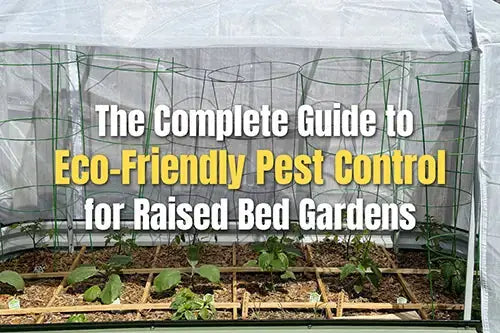
The Complete Guide to Eco-Friendly Pest Control for Raised Bed Gardens
Last Updated: June 12, 2026 by Vegega Team
The most effective eco-friendly pest control strategy for raised bed gardens is to combine prevention, early detection, beneficial insects, companion planting, physical barriers, and organic treatments when necessary. Raised beds make pest management easier by improving airflow, allowing better soil control, and making it easier to monitor plants. Instead of relying on chemical pesticides, gardeners can build a healthier garden ecosystem that naturally reduces pest pressure over time.
- Why Raised Beds Make Pest Control Easier
- Common Garden Pests in Raised Beds and How to Identify Them
- Eco-Friendly Pest Control Methods That Actually Work
- Preventing Pest Problems Before They Start
Many gardeners have had a similar experience: the tomatoes were doing fine yesterday, but today the leaves are covered in small holes. The kale that looked healthy has started to yellow and curl. Newly sprouted seedlings were gnawed overnight, leaving nothing but bare stems. In such situations, many gardeners instinctively reach for the most potent insecticide available, hoping to resolve the issue in one attempt. But truly successful vegetable gardens usually remain healthy without frequent spraying. In fact, most serious pest problems don't arise because of a lack of pesticides—they arise because the ecosystem has fallen out of balance.
In a natural setting, pests don't multiply indefinitely. Ladybugs prey on aphids. Parasitic wasps keep caterpillar numbers in check. Birds and other predatory insects help maintain the balance. When we rely too heavily on chemicals, we often kill off these beneficial organisms along with the pests, ultimately making the problem worse.
That's why more and more home gardeners are turning to eco-friendly pest control. Unlike conventional chemical methods, ecological pest control emphasizes prevention, monitoring, and long-term management. By creating a healthy garden environment, plants develop stronger natural resistance, and the chance of pest outbreaks decreases.
Metal raised garden beds offer natural advantages in this process. Better drainage, a more manageable soil environment, easier daily observation, and simpler installation of insect-proof covers all make pest control more effective. In this guide, we'll walk you through the most common pest types in raised bed gardens, how to identify them quickly, and which eco-friendly control methods actually work.
Why Raised Beds Make Pest Control Easier

Whether you're gardening in the ground or in raised beds, pests are never completely avoidable. But when the same pest problem occurs, raised beds are almost always easier to manage.
First, because the bed is elevated, plants sit at a more comfortable viewing height. Gardeners don't need to bend over constantly to check leaf undersides or stem bases, making it easier to spot problems early. Before most pests cause serious damage, they leave clear signs: small bite marks on leaves, curling or distortion, sticky honeydew residue, or clusters of eggs.
Second, raised beds typically offer better air circulation. Good airflow not only reduces fungal diseases but also discourages the high-humidity conditions that many pests prefer. For insects like aphids, whiteflies, and spider mites, healthy, vigorous plants are naturally more resistant than stressed ones.
Soil management is another key advantage. The soil mix, drainage capacity, and organic matter content of a raised bed are easier to control. And healthy soil leads to stronger roots and more stable plant growth. When plants are growing in optimal conditions, their tolerance to pests increases as well.
Additionally, raised beds make it much simpler to install protective covers. Row covers, insect netting, hoop systems, and greenhouse covers can all be attached directly to the bed frame, creating a physical first line of defense that blocks pests before they ever reach your plants.
In the end, raised beds don't make pests disappear. But they help you detect problems earlier, take action more easily, and build a more complete ecological pest control system.
Common Garden Pests in Raised Beds and How to Identify Them
Different animals leave different damage signs. Learning to recognize these signs is often more important than blindly installing protective measures, because only by identifying the real culprit can you choose the most effective protection plan.
1. Leaf Suckers

Leaf suckers are the most common type of pest in home vegetable gardens. They don't directly eat leaves. Instead, they use needle-like mouthparts to pierce plant tissues and continuously suck out sap for nutrients. Because their feeding process is relatively hidden, many gardeners don't notice a problem until plants show obvious signs of decline.
Common representatives include:
- Aphids (e.g., black aphids)
- Whiteflies
- Spider mites
These pests typically gather on leaf undersides, buds, new shoots, and flower buds—where tissues are softer and sap is more abundant.
Infested plants often show the following symptoms:
- Leaves curling or becoming deformed
- Yellowing or pale discoloration
- Slowed growth rate
- Underdeveloped new leaves
- Sticky honeydew on leaf surfaces
Among these, aphids and whiteflies secrete large amounts of honeydew, which attracts ants and creates conditions for sooty mold to grow. Spider mites are very small but leave fine speckles on leaf surfaces; in severe cases, thin webbing can be seen. If not controlled in time, these pests can multiply rapidly and weaken an entire plant's growth vitality in a short period.
2. Leaf Chewers

Leaf chewers are the easiest pests to spot through leaf damage. Unlike sap-sucking pests, they feed directly on leaf tissue, so the damage they cause is usually more obvious.
Common types include:
- Caterpillars
- Cabbage worms
- Flea beetles
The damage patterns vary by pest:
- Caterpillars and cabbage worms eat large sections of leaf tissue.
- Flea beetles leave many small, round holes.
- Some larvae chew leaves down to just the veins.
Typical symptoms include the following:
- Irregular holes in leaves
- Notched or scalloped leaf edges
- Skeletonised leaves (only veins remain)
- Seedlings with large amounts of leaf tissue eaten
For leafy greens like lettuce, spinach, kale, and cabbage, these pests are often one of the most destructive threats. Even if a plant survives, damage to leaf appearance significantly reduces harvest quality.
3. Stem & Vine Borers

Stem and vine borers are among the most secretive pests because most of their activity happens inside the plant.
The most typical representative is the squash vine borer. Adults lay eggs at the base of pumpkin, zucchini, and squash plants. After hatching, the larvae quickly burrow into the stem and continue feeding inside. Because the damage occurs inside the plant, many gardeners don't detect the problem early. Common signs include:
- Sudden wilting of individual stems or entire plants
- Wilting during the day with brief recovery at night
- Small holes at the base of the stem
- Sawdust-like frass (excrement) near the holes
In many cases, plants look healthy one day but collapse a few days later. Only when the stem is cut open do you find that the inside has been severely damaged by larvae.Since the problem is often discovered too late, prevention is usually more important than treatment.
4. Fruit & Crop Attackers

Some pests aren't interested in leaves—they specifically attack developing fruits and edible parts.
Common representatives include:
- Tomato hornworms
- Stink bugs
- Cucumber beetles
The problems they cause affect not only yield but also fruit quality.
Affected crops may show:
- Deformed fruit
- Spots or scars on the fruit surface
- Bite marks
- Premature rot
- Overall decline in quality
For example, tomato hornworms can devour large amounts of tomato leaves and young shoots in a short time. Stink bugs suck fruit juices through their needle-like mouthparts, causing sunken, discolored spots on the fruit surface. Cucumber beetles not only chew leaves and fruits but also spread bacterial diseases, posing a dual threat to cucumbers, melons, and other cucurbits. Because these pests directly affect the final harvest, extra attention should be paid to monitoring during the fruit-setting period.
5. Soil & Root Pests

The most easily overlooked pests are often the ones underground—hidden in the soil and rarely seen directly.
Common types include:
- Cutworms
- Grubs
These pests attack plant roots, underground stems, or the base of seedlings.
Typical symptoms include the following:
- Seedlings suddenly falling over (cut off at the base)
- Plants stop growing
- Leaves turn yellow
- Root system is damaged
- The entire plant wilts
Cutworms are often active at night and will chew through the stems of newly transplanted seedlings, making the plant look like it was cut by scissors. Grubs continuously gnaw on the root system, weakening the plant's ability to take up water and nutrients.
Because the damage from underground pests isn't immediately visible, many gardeners mistakenly think the problem is insufficient watering, lack of fertilizer, or disease. In reality, when plants seem healthy but suddenly stop growing or fall over for no obvious reason, checking the roots and soil will often reveal the real cause.
Eco-Friendly Pest Control Methods That Actually Work
Attract Beneficial Insects

Not all insects are enemies. In fact, some are your best allies in the garden.Ladybugs, lacewings, and parasitic wasps are all important natural predators. Planting the following flowers and herbs can help attract them to your raised beds:
- Marigolds
- Alyssum
- Dill
- Fennel
- Cilantro
An increase in the population of beneficial insects will naturally keep many common pest problems in check.
Use Companion Planting Strategically

Smart plant combinations do more than just save space—they can also interfere with pests' ability to find their target crops. For example:
- Marigolds are commonly used to repel certain soil pests.
- Nasturtiums can serve as trap plants, attracting aphids away from your vegetables.
- Basil is often planted near tomatoes to improve growth and deter pests.
Companion planting won't eliminate pests entirely, but it can reduce the risk of a concentrated outbreak.
Physical Controls

Physical prevention is often the safest and most direct method of pest control. Common measures include:
- Hand Picking – removing pests manually
- Insect Netting – blocking pests from reaching plants
- Raised Bed Covers – protecting seedlings and young plants
- Sticky Traps – capturing flying insects like whiteflies and aphids
- Diatomaceous Earth – a natural powder that damages soft-bodied insects
Among these, insect netting and row covers are especially well-suited for raised beds. They're easy to install and create a barrier before pests ever come into contact with your plants.
Organic Treatments
When pest pressure exceeds what you can tolerate, organic control products are a beneficial next step. Common options include:
- Neem Oil – effective against a wide range of sap-sucking pests
- Insecticidal Soap – works well on soft-bodied pests like aphids and whiteflies
- Homemade Soap Spray – a gentle option for minor infestations
- Bacillus thuringiensis (Bt) – a natural bacterium that targets caterpillars and certain larvae
These products generally have a low environmental impact, but they should still be used correctly according to the label instructions.
Creating a Multi-Layer Defense System
The most effective pest control begins before pests ever appear. Healthy soil grows stronger plants; proper spacing improves air circulation; crop rotation prevents specific pests from building up over time; and regular inspection helps gardeners take action before a problem spreads.
Most serious infestations don't happen overnight—they build up over weeks or even months. Gardeners who spend just a few minutes each day observing leaves and checking on their plants are often able to catch issues while they're still minor.
The goal of pest control isn't to create a completely insect-free garden. It's to establish a more balanced and resilient growing environment. When different protective measures work together, pests naturally become easier to manage and no longer stand in the way of a successful harvest.
Conclusion
Pests are a problem in almost every vegetable garden, but effective control doesn't mean reaching for chemical pesticides at the first sign of trouble. In fact, most consistently productive, long-term gardens rely on prevention, monitoring, and ecological balance—not constant spraying.
Metal raised beds won't make pests disappear entirely, but they do make pest management easier. Whether you're dealing with aphids, caterpillars, squash bugs, or underground pests, the most effective strategy is rarely a single solution. Instead, it's a combination of healthy soil, smart planting, beneficial insects, physical barriers, and organic treatments when needed. By building a more balanced ecosystem, you can not only reduce pest pressure but also harvest healthier, safer vegetables and fruit.
After all, the goal of eco-friendly pest control isn't to eliminate every insect in your garden. It's to keep pests within a manageable range. When the garden ecosystem reaches balance, plants grow stronger—and gardening becomes easier. We have a guide talk about How to Keep Animals Out of Raised Garden Beds you may be interested in.