How to Create a Pollinator Garden That Attracts Beneficial Insects
Last Updated: September 18, 2026 by Vegega Team
An effective pollinator garden does not need to be large. The key is to choose plants that provide nectar and pollen and to match plants with different flowering periods, heights, and growth environments. This can attract pollinators such as bees and butterflies, as well as beneficial insects such as ladybugs, hoverflies, and dragonflies.
- Choose the Right Pollinator Plants for Your Garden
- Which Beneficial Insects Can a Pollinator Garden Attract
- How to Make Your Garden More Attractive to Beneficial Insects
- How to Build a Pollinator Garden in a Raised Bed
A garden can be more than a place to grow vegetables and flowers. With the right plants, it can become a lively habitat where bees, butterflies, dragonflies, and other beneficial insects naturally find food and shelter. These visitors can add biodiversity to your garden, while some also help with pollination or natural pest control.
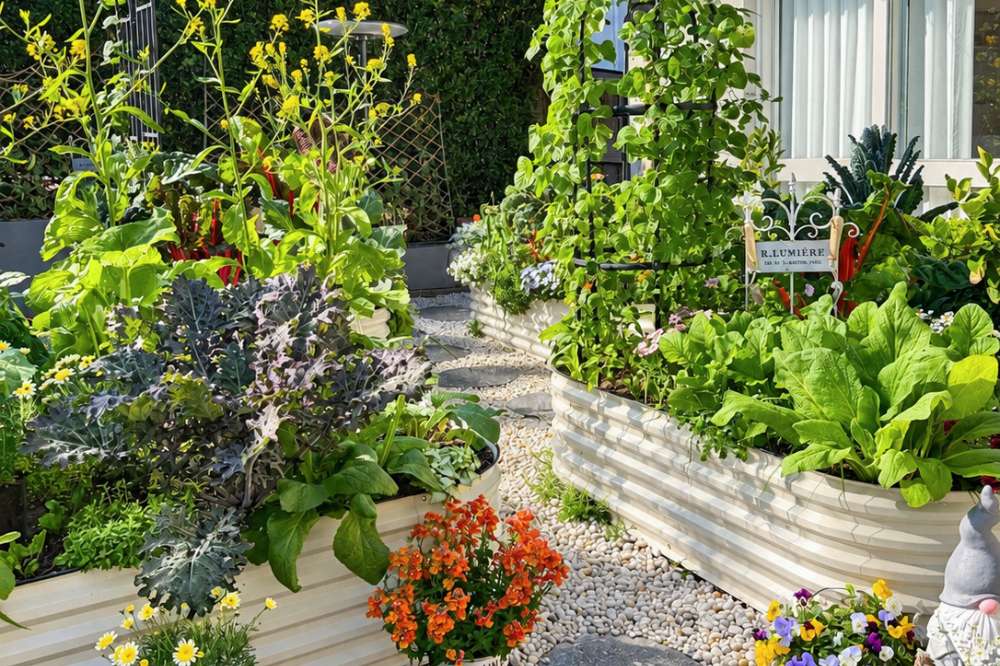
The key is choosing plants with purpose rather than simply filling a garden with flowers. A mix of flowering plants, native species, and plants that bloom at different times can make your garden more useful to pollinators throughout the growing season. Whether you have a large flower garden or a few metal raised garden beds, you can create a pollinator garden that supports a more balanced garden ecosystem.
Choose the Right Pollinator Plants for Your Garden

Choosing plants is the core of building a pollinator garden. A truly attractive garden is not about planting as many flowers together as possible but about making the plants complement each other in terms of flowering period, flower type, growth environment, and food supply. In this way, the garden can continue to provide nectar and pollen for a long time, rather than attracting insects only during a certain short flowering period. Moreover, when choosing pollinator plants, we should first consider native plants. Because native plants have usually adapted to local climate, soil, and seasonal changes, they are also easier to integrate into the local ecosystem.
Choose plants with different bloom times. If the plants in the garden are flowering at the same time, the food supply that pollinators can obtain will also be concentrated in a shorter period of time. Therefore, matching plants with different flowering periods is better than pursuing a specific type of flower that is particularly attractive to insects, as this ensures that the flower is particularly attractive to insects. It is better to match plants with different flowering periods so that flowers will bloom in spring, summer, and autumn.
For example, Black-eyed Susans can add bright yellow flowers to the summer garden. Joe-Pye Weed usually blooms from mid-to-late summer to autumn, and the plants are taller, which can add a vertical level to the garden. Swamp milkweed is suitable for humid environments and can attract butterflies, bees, and other flower-visiting insects.
In addition to the flowering period, plants need to be selected according to the growth conditions. Both white yarrow and meadow sage are relatively easy to maintain. Among them, Meadow Sage is suitable for sunny locations, while White Yarrow is more adaptable to soil conditions. These plants can be the basis for pollinator-friendly plants, and other varieties can be added based on the garden's space and environment.
If there are ponds or rain gardens in the garden, you can also consider water lily and cattail. They are different from ordinary flowering plants, more suitable for waterside or wetland environments, and can also provide favorable habitat conditions for dragonflies.
Which Beneficial Insects Can a Pollinator Garden Attract


Bees are one of the most common pollinators. In the process of collecting nectar and pollen between flowers, they will bring pollen to other flowers, thus helping many flowering plants complete pollination. Butterflies also visit a large number of flowering plants, while hoverflies have both pollination and pest control values; adults often feed on nectar and pollen, while their larvae prey on soft pests such as aphids.
Ladybugs will prey on soft pests such as aphids and mites; hoverfly larvae will also prey on aphids in large numbers. Ground bees are mainly active in the soil and near mulch and can prey on slugs, snails, cutworms, and some caterpillars. These are all natural pest controllers.
Praying mantises, assassin bugs, and damsel bugs are also predatory insects that prey on caterpillars, aphids, and other small insects. Although spiders are not strictly insects, they are also important predators in the garden and can help control the number of many insects.
Dragonflies are another type of beneficial insect that deserve attention. But do you know what plants attract dragonflies? Unlike bees and butterflies, they do not rely on flowers for their main food. Adult dragonflies prey on mosquitoes and other small flying insects, while their larvae need an aquatic environment to develop. If there is a stable water source near the garden, the conditions for attracting dragonflies are usually better. Aquatic plants such as water lily and cattail can provide dragonflies with a suitable aquatic environment, in which cattail grows in shallow water or wetland environments, while water lily can provide vegetation space on the water surface. Besides, here are 7 pollinator-friendly plants that attract dragonflies you may want to know.
The combined effect of these insects is not to eliminate all pests but to maintain a balance between predator and pest populations in the garden ecosystem. Therefore, having a garden with beneficial insects does not mean that there will be no pests at all, but it reduces the possibility that pests will quickly get out of control.
How to Make Your Garden More Attractive to Beneficial Insects

Provide Food and Shelter Throughout the Garden
In addition to nectar and pollen, some natural materials can be preserved in the garden to provide more habitat for beneficial insects. For example, mulch, logs, and stones can all be places for insects to hide or move. Instead of tidying up the garden too cleanly, it is better to keep part of the natural structure and let the garden form a habitat closer to the natural environment.
Plant diversity is equally important. Different types of flowering plants can provide different food sources, and plants with higher, lower, or different growth forms can also form a richer spatial level in the garden. In this way, it is easier for bees, hoverflies, ladybugs, and other beneficial insects to find a place that suits them.
Protect Beneficial Insects with Integrated Pest Management
If you want beneficial insects to play a role in the garden, you need to reduce unnecessary interference with them. Frequent use of broad-spectrum pesticides may not only affect garden pests but also beneficial insects that are active in the garden.
This is also where Integrated Pest Management (IPM) comes into play. Instead of chemical treatment immediately when you see pests, you can first observe the number of pests and the degree of plant damage and combine physical removal, healthy plants, natural predators, and other methods for management. This can not only control pest populations but also keep ladybugs, ground bees, hoverflies, and other beneficial creatures as much as possible.
How to Build a Pollinator Garden in a Raised Bed

Combine Different Plants in One Raised Bed
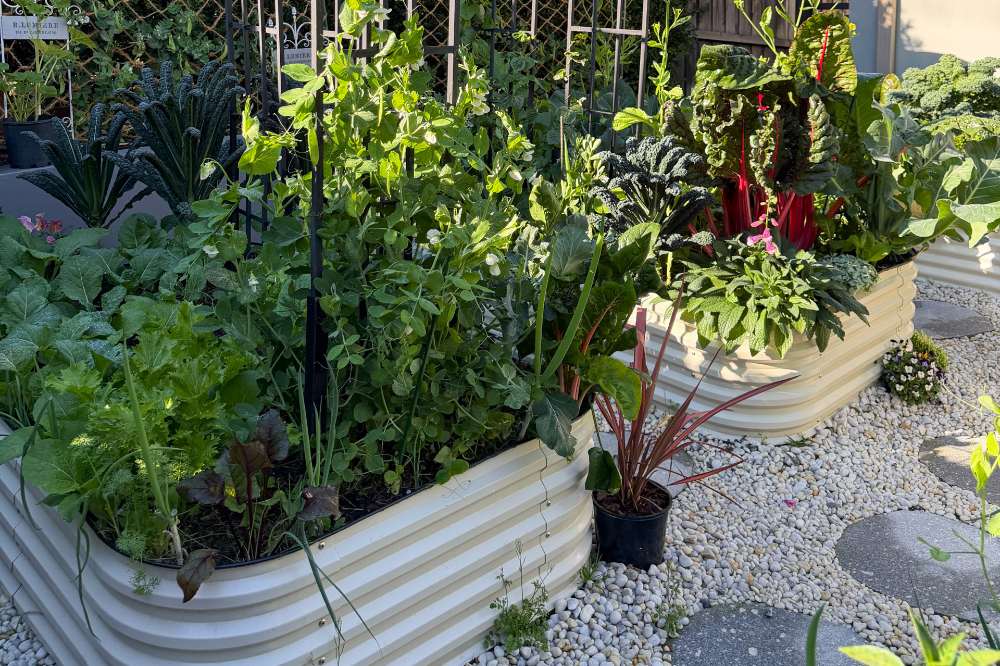
When planting pollinator plants in raised beds, plants of different heights can be combined. Taller flowering plants can be placed in the back or center of the bed, and shorter plants can be planted in the front so that they can make full use of the vertical space while also avoiding taller plants from blocking other plants. We have prepared a professional article about vertical gardening in metal raised beds: trellis and arch ideas for fall veggies. You can refer to it.
In addition to flowering plants, you can also match some herbs to allow the same raised bed to provide different types of food sources at the same time. Instead of planting a large number of the same plants in a limited space, it is better to choose several pollinator-friendly plants with different flowering periods and growth habits to keep the garden open for a longer period of time.
Create a Compact Pollinator Habitat
If the space of the raised bed is limited, there is no need to over-plant in order to accommodate more plants. Reserve a certain amount of space and use some scientific filling methods to create a lasagna garden bed or hugelkultur garden bed, which can make this small space provide both food and shelter.
This method is especially suitable for creating a compact pollinator garden. Whether it is a small raised bed or multiple metal raised beds of different shapes, the number and layout of plants can be adjusted according to the space. The key is not how big the garden is, but whether the limited space can provide a variety of plants and an environment suitable for beneficial insect activities.
For those who want to reduce bending over and make it easier to manage the garden, the 32” tall metal raised bed can also be an option for building a pollinator garden. The centralized planting of flowering plants, herbs, and other plants suitable for the local environment in a raised bed can make daily watering, observation, and maintenance more concentrated while maintaining a clear planting area.
Conclusion
A good pollinator garden is not just about planting a few beautiful flowers, but through plant diversity, continuous food sources, and suitable habitat, both pollinators and beneficial insects can find their place in the garden.
From choosing pollinator plants that are suitable for the local environment to matching flowering plants with different flowering periods to providing shelter and reducing unnecessary pesticide use, even a small raised bed can become a valuable pollinator habitat. Instead of pursuing the number of plants planted, it is better to start with the diversity of plants and the overall environment of the garden so that beneficial insects naturally become part of the garden ecosystem.