How to Keep Your Raised Bed Productive From Summer to Fall
Last Updated: August 14, 2026 by Vegega Team
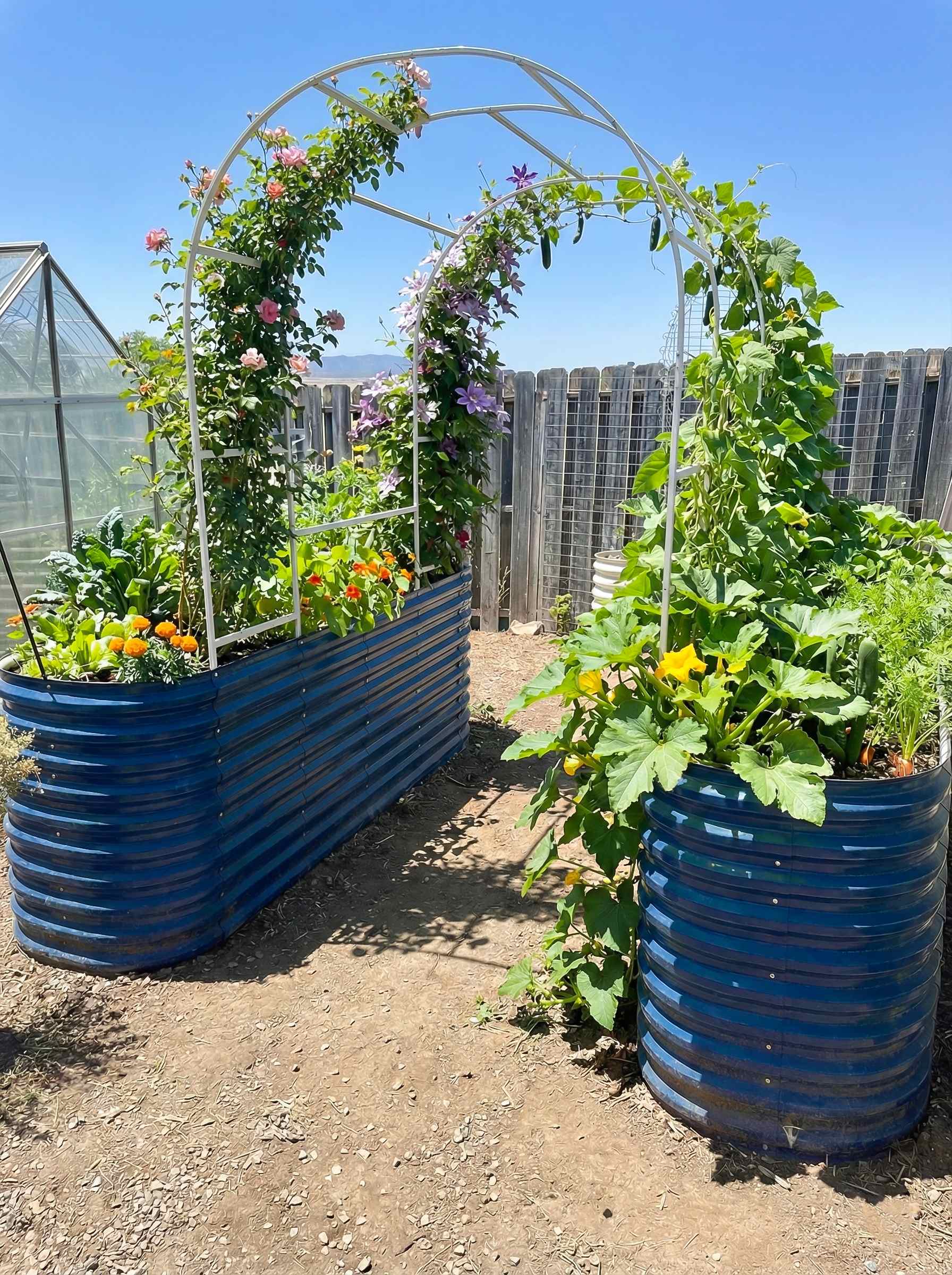
If you want the raised bed to continue to produce high yields from summer to autumn, you can extend the planting cycle by restoring soil fertility, organizing summer crops in time, planting vegetables suitable for autumn growth, and using protective measures to resist cooling and frost.
- Refresh Your Raised Bed Soil After Heavy Summer Growth
- Clean Up Summer Crops and Prepare for the Next Planting
- Plant Fall Crops to Extend Your Raised Bed Harvest
- Extend Your Growing Season With Raised Bed Protection
Entering August, many raised beds will experience an obvious change: the vibrant plants begin to look worn out. Tomatoes have been bearing fruit for several weeks, cucumber vines have become messy, leafy vegetables may have already bolted, and after several months of planting and frequent watering, the soil is not in as good condition as it was at the beginning of the season. At this time, many people will naturally think that after the summer harvest is over, they should empty the raised bed and wait until next spring to start again. But for many regions, August is precisely the beginning of another planting stage, not the end. The second half of the summer crop does not mean that the entire garden will stop. On the contrary, this point is suitable for re-evaluating the raised bed. Which plants are worth keeping, and which have entered the low-yielding period?
If this seasonal transition period is used well, the same raised bed can naturally transition from summer crops to fall crops so that the land will not be vacant for a long time because of the end of a batch of plants. Next, we will look at four aspects: soil, summer crop sorting, autumn planting, and season-extending protection to see how to make metal raised garden beds continue to maintain productivity after summer.
Refresh Your Raised Bed Soil After Heavy Summer Growth

After continuous planting throughout the spring and summer, the soil in the raised bed has undergone several months of consumption. High-yielding crops continue to absorb nutrients from the soil, and frequent watering may also accelerate the loss of some soluble nutrients. If you plan to continue planting in the autumn and sow directly in the original state, you will often not be able to give full play to the productivity of the soil. Therefore, late summer is a good time for soil refresh. It does not mean to replace all the original soil but to restore the soil in raised beds to support the next round of crop growth by supplementing organic matter, restoring nutrients, and improving the soil structure.
Replenish Nutrients After Heavy Summer Feeding
Before preparing for autumn planting, a layer of mature compost or other organic fertilizer can be added according to the soil state. Compared with the one-time large-scale application of high-concentration fertilizers, moderate supplementation of organic matter is more suitable as a soil maintenance method during seasonal changes.
If you use animal manure, you can choose manure that is fully ripe. Unripe manure may be too "thick” and even cause damage to the plant root system, so it is more suitable as a source of organic matter after full decomposition, rather than being directly added to the planting area.
If you want to make your own compost, late summer is also a good time to check whether the compost is mature and can be put into the raised bed. You can refer to our Hot vs. Cold Composting-related articles, learn about different composting methods, and learn how to continuously provide organic matter to the garden.
Add Organic Matter to Improve Soil Structure
After frequent watering and continuous root growth, the soil may experience compaction, decreased water retention, or insufficient organic matter. Adding organic matter such as mature compost can help improve the structure and water retention of the soil while providing a continuous source of organic matter for soil microorganisms.
This is especially important for raised beds, because the planting soil in raised beds is usually not as continuously replenished by the surrounding environment as natural ground soil. Every time a complete planting season passes, it is worth paying renewed attention to the soil itself, not just what to plant in the next batch.
Protect the Soil With Organic Mulch
After completing the soil amendment, you can cover the surface of the soil with a suitable layer of organic mulch, such as shredded leaves, straw, or other organic mulch. Mulch in late summer can help the soil reduce water evaporation, buffer soil temperature changes, and gradually increase organic matter in the subsequent decomposition process. This is valuable for August's raised bed. When the weather is still hot, mulch can help keep the root zone relatively stable. After entering autumn, it can continue to protect the soil and reduce the impact of frequent cooling and rainfall on the soil surface.
Turn Summer Cleanup Into a Soil-Building Cycle
The debris of healthy plants cleaned up after the summer does not have to be thrown away directly. Plant materials that do not have obvious pest and disease problems can be sorted out and placed in the compost pile so that the organic matter originally grown from the soil can be decomposed and returned to the garden system.However, for plant residues that have been obviously infected with serious diseases or pests, it is not recommended to directly join the family compost to avoid pathogen or pest problems, as compost returns to the raised bed again.
Clean Up Summer Crops and Prepare for the Next Planting

Keep Productive Summer Crops Growing
Not all summer plants that look tired need to be unplugged immediately. If the plant can continue to bloom and bear fruit, it can continue to be preserved. The goal of this stage is not to get them back to the spring growth rate but to extend the production period of existing plants as much as possible.
The high temperature in late summer is an important factor affecting the continued production of these crops. Compared with frequent fertilization, more attention should be paid to whether the root zone environment is stable. Keeping the soil moderately moist and avoiding repeated drying and wetting of the root zone at high temperatures can help plants reduce moisture pressure. For raised beds exposed to strong summer sunlight, mulch can also reduce water evaporation and temperature fluctuations on the soil surface.
Remove Crops That Are No Longer Worth Keeping
On the other hand, some summer crops have completed the main harvest or have continued to weaken due to serious diseases and low yields. Such plants continue to stay in the raised bed but will occupy the space needed for the next round of planting.
If the plant is already difficult to recover and the remaining harvest is limited, there is no need to keep it for “reluctance to unplug." Timely removal can allow new fall crops to enter the planting location earlier, and it can also reduce the chance of diseased leaves and dead branches remaining in the garden.
Prune for Airflow Instead of Simply Cutting Back
For summer crops that are still worth preserving, the focus of finishing should be to improve the state of the plants, not to significantly shrink the plants.
As summer enters the second half of the year, crops such as tomatoes and cucumbers often have dense branches and leaves. Proper removal of dead yellow leaves, damaged branches, and obviously crowded parts can make it easier for air to pass through the plants while making it easier for fruits to get light.
But pruning should be done selectively. Not when the weather is hot; excessive leaf removal may expose the fruit and root system to stronger heat stress. It cannot be pruned on rainy days, which will not help wound healing. Especially if tomatoes are exposed to wounds on rainy days, they are more likely to be at risk of blight.
Make Space for the Next Crop
When part of the summer crops is cleared, don't leave the vacated area empty for a long time. This is the window period for August to carry out the next round of planting planning. Based on the local first frost date, remaining growth time, and crop maturation rate, it can be determined which areas can be used for fall crops immediately and which areas continue to be reserved for summer plants that have not yet ended production. In this way, the raised beds do not need to go through an obvious “end of summer—garden vacant—restart in autumn” stage but can gradually complete the conversion between crops.
Plant Fall Crops to Extend Your Raised Bed Harvest

Grow Leafy Greens for a Cooler Fall Harvest
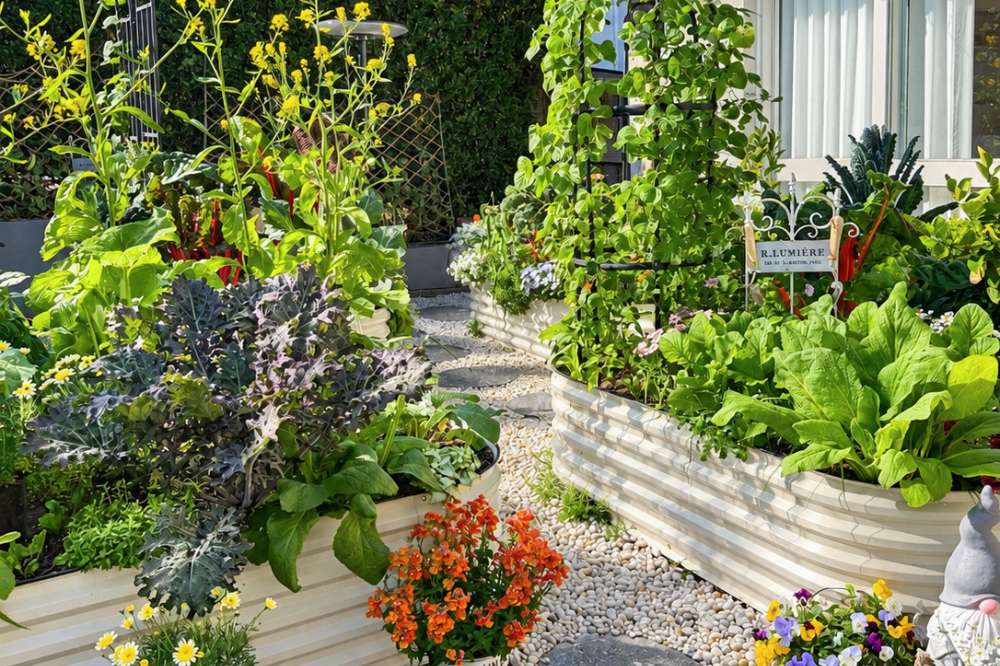
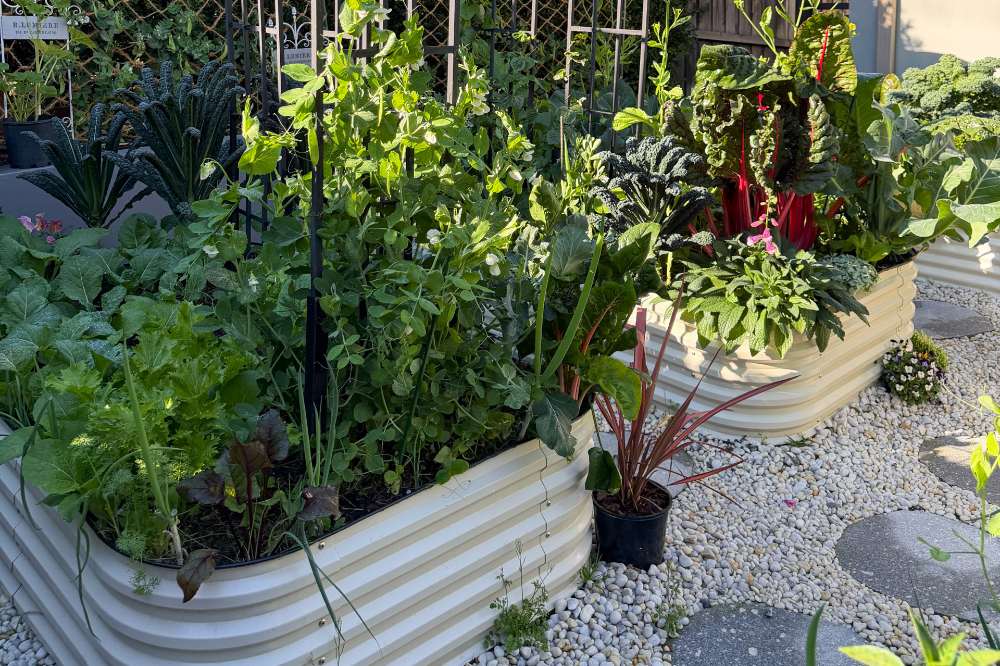
Many leafy greens such as lettuce, spinach, kale, Swiss chard, etc., are prone to slow growth, bolting, or leaf quality degradation in hot weather, but as the temperature drops, they are often able to restore a more comfortable growing environment. Therefore, the location of the previous summer crops can be gradually converted into a new leafy vegetable area.
Plant Root Crops That Thrive as Temperatures Drop
In addition to leafy vegetables, root crops such as radishes, carrots, and beets are also suitable for adding to a fall garden. The main harvest part of this type of crop is located below the soil, so it does not need to rely on a long, high-temperature growth period like tomatoes or cucumbers. Choosing the right varieties and arranging sowing according to the remaining local growing time allows the raised beds to continue to provide a new harvest in the autumn.
Choose Crops That Can Stay in the Garden Into Winter
If the winter in your area is relatively mild, you can further consider crops that can withstand low temperatures. For example, some kale, spinach, carrots, and other cold-hardy vegetables can stay in the garden longer than ordinary summer vegetables under proper protection. This means that fall gardening does not necessarily mean “the last batch of vegetables will be over in autumn.” Under suitable climatic conditions, some cold-tolerant crops can even continue to grow until late fall or winter.
Use Succession Planting to Keep the Bed Productive
The same leafy green can be divided into two to three batches and planted separately after an interval of one to a few weeks. When the first batch began to be harvested, the second batch was still in the growing stage, and then the third batch was picked up. This method is especially suitable for raised beds, because you can gradually free up space according to the time when the summer crop exits, rather than having to empty the entire garden at once.
For instance, the end of summer tomatoes → free up part of the space, and plant autumn lettuce and continue to use other vacancies to sow spinach in a few weeks. As a result, the production cycle of raised beds has changed from a simple spring-to-summer harvest to a more continuous seasonal planting cycle.
Extend Your Growing Season With Raised Bed Protection

After entering autumn, the main factors restricting the continued production of raised beds are no longer the high temperature in summer but the lower and lower night temperature, the first frost, and the shortened sunshine time. Even if the autumn crop itself is cold-resistant, if it suddenly encounters low temperatures or frost, it may affect growth and even end the harvest early. Therefore, it is more effective to start preparing protective measures in early fall than to wait until the first frost arrives before processing.
Row covers, frost cloth, or other garden covers can provide additional protection for plants at night and help slow the temperature drop. For autumn vegetables such as lettuce, spinach, and kale that have been planted, they can be covered in advance on nights when low temperatures or frosts are expected, according to the local weather forecast. If your metal raised bed is equipped with a trellis & cover system, it can also be more convenient to build a covering space and add an additional protective layer when the plants are not moved frequently.
Conclusion
Summer does not have to be the end of your raised bed growing season. By August, you can begin transitioning from summer crops to fall vegetables instead of leaving your garden empty until spring.
Refresh the soil after months of heavy growth, remove crops that have finished producing, plant vegetables suited to cooler weather, and prepare simple protection for the first cold nights. With the right timing, the same raised bed can continue producing fresh vegetables well into fall.