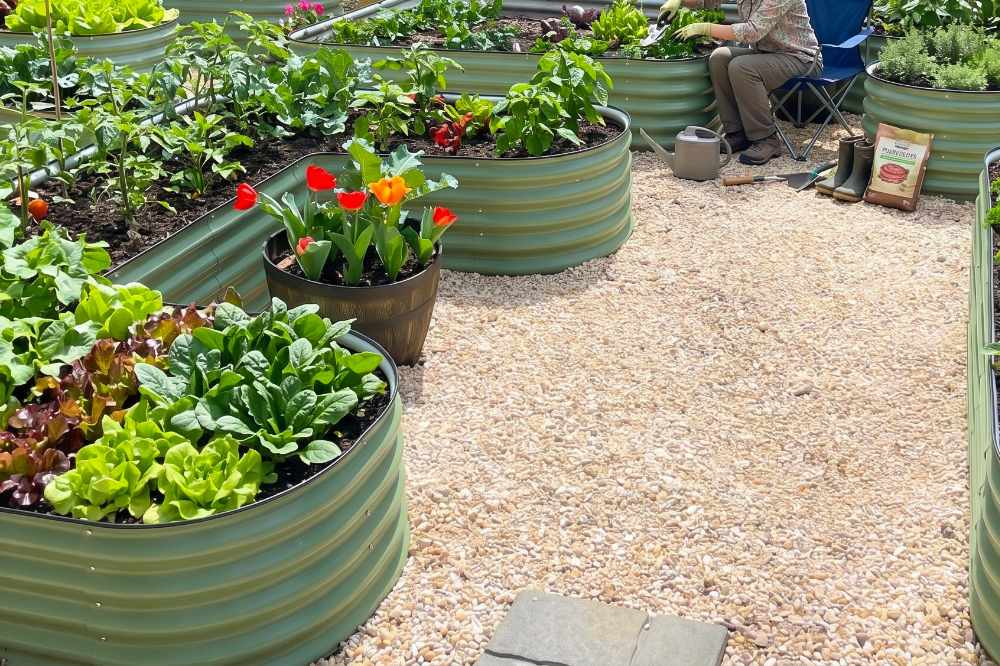
Metal Raised garden beds Vs Wooden raised garden beds
Last Updated: May 9, 2026 by Vegega Team
Metal raised beds generally last longer, require less maintenance, and resist rot, especially in humid or rainy climates. Wooden raised beds offer a more natural appearance and lower upfront cost, but, comparably, wooden beds are prone to rot over time. So the best choice depends on your budget, climate, and how much time you want to spend on upkeep.
Section Lists:
- Pros and Cons of Wood and Metal Raised Garden Beds
- Comparison of Wood and Metal Raised Beds
- How to Choose the Right Raised Garden Bed
Before you start to build a raised bed, you may consider: Should you choose wood or metal beds?
Some people's first reaction is price; some care about appearance, and some are worried about lifespan, maintenance, and even soil safety. But these factors often do not determine the answer alone; what really affects the choice is the trade-off between them.
Wood raised garden beds are natural, traditional, and easy to customize. In contrast, metal raised garden beds are associated with durability, low maintenance, and modern design. Therefore, instead of asking, "Which one is better?" it is better to ask, "Which one is more suitable for your daily use?" In this article, we will make a more specific comparison of metal and wood raised beds from durability, maintenance, soil safety, and design aspects.
Pros and Cons of Wood and Metal Raised Garden Beds
Before making a specific comparison, here are the core advantages and disadvantages of the two materials.
Wooden Raised Garden Beds

Many starters will choose wood to make their raised beds, as it is more natural and closer to the feeling of traditional gardening. Moreover, wood itself is easier to process. Whether it is dimensional adjustment or personalized design, it is relatively flexible, which is why many DIY enthusiasts prefer to choose it.
But apart from these advantages, it is also accompanied by a relatively obvious shortage.
Wood panels are prone to cracking, rotting, or becoming moldy when exposed to rainy or wet conditions over time. They are also vulnerable to insects, especially in humid or rainy areas.
Therefore, to extend their service life, many wooden raised beds need to be sealed or treated with anti-corrosive compounds. However, some treated wood may contain chemical components that can leach into the soil during long-term use.
In this way, wooden raised beds are more suitable for short-term use or users who have a certain degree of acceptance of maintenance.
Metal Raised Garden Beds

Conversely, metal raised beds usually perform better in terms of structural stability and weather resistance and are not susceptible to pests or humid environments. All the hot-selling metal bed materials available on the market are galvanized steel, corten steel, aluminum, Zn-Al-Mg steel, etc. These materials have their own benefits, but there is no hesitation to say that Zn-Al-Mg is the best material on the market. (Related comparisons can be found in this article: Zn-Al-Mg Steel Metal Raised Beds vs. Other Material Metal Raised Beds.) In daily use, metal steel beds mean gardeners do not need to maintain panels as frequently as with wooden beds. In the long run, this stability will bring lower time costs and a more predictable user experience.
However, metal is not completely without shortcomings. Compared with wood, it usually has a higher initial investment and a more modern appearance. For gardeners who prefer natural and country styles, it may not be as intuitive as wooden materials. In addition, there are also differences between different metal materials and coating processes, which will directly affect their durability and actual performance. Therefore, you have to select carefully before you start.
To sum up:
- Wooden beds: natural appearance + flexibility + lower initial cost
- Metal beds: durability + low maintenance + long-term stability
Because of these factors, this choice is not “which is better" but more depends on your preference for the use cycle, maintenance investment, and overall style.
Comparison of Metal and Wood Raised Bed

1. Durability & Lifespan
For most gardeners, durability is one of the key factors in determining what kind of raised beds to use. The true value of a garden bed is not just the first year of use experience, but whether it can remain stable in long-term sun, rain, moisture, and seasonal changes.
From this point of view, the difference between wood and metal is obvious.
The lifespan of a wooden raised bed is closely related to weather conditions. Wood is a natural material, and after long-term exposure outdoors, it will continue to be affected by moisture, temperature changes, and insects. Especially in humid or rainy environments, it is easy for rot, mold, cracking, and even termite infestation to occur.
Generally speaking, the average service life of wood raised beds is about 5-10 years. Although there are now treated materials such as cedar or treated wood that can extend the service life to a certain extent, wooden beds still require continuous maintenance in order to maintain a long-term stable state.
In comparison, metal raised beds have a longer service life. Premium metal raised beds include aluminum garden beds, Zn-Al-Mg steel garden beds, and galvanized garden beds. These garden beds have strong corrosion resistance and will not be infested by insects—no need to worry about the wet environment making the bed rust. Among them, Vegega's Zn-Al-Mg steel beds can be guaranteed for 20 years without maintenance and replacement. Also, since there is no need to change materials frequently, waste of resources can also be reduced in the long run.
2. Easy to Assemble
Assembly difficulty directly affects purchase decisions. Especially in large raised garden beds or multi-bed layouts, whether the installation is complicated or not will directly affect the overall gardening experience.
The advantage of wooden raised beds is their high flexibility. Gardeners can freely adjust the size according to their own space requirements, and even build DIY from scratch. But that means you have to cut, drill, measure, and use additional tools to re-plan. For gardeners without woodworking experience, the entire assembly process may be relatively time-consuming.
Modern metal raised beds use modular panel structures. Most beds only need to be fixed according to the reserved hole position, and no additional cutting or heavy-duty tools are required, so the assembly process is usually more straightforward. To meet different needs, there are many sizes and shapes in VEGEGA. They aim to provide the best products and user experience for gardeners.
3. Cost & Maintenance
From the initial cost point of view, the cost of wood raised beds is lower, but their maintenance cost is higher. Wooden raised beds cost around $0 to $500. Instead of buying a wooden raised bed kit, gardeners can simply purchase wood planks and build a DIY planter themselves. For gardeners who like DIY gardening, this method is not only flexible but also reduces the upstream cost.
But the problem with wood is that its follow-up maintenance is continuous. After long-term exposure to outdoor environments, wood usually needs sealing, painting, or anti-rot treatment to slow down the effects of moisture. Otherwise, mold, warping, or structural degradation can easily occur gradually over time.
In contrast, metal raised garden beds are more worry-free in daily use. In particular, metal beds that use corrosion-resistant coating do not require sealing, painting, or replacement under normal use.
Metal raised beds approximately range from $130 to $1000 depending on size, height, and material. Although the upstream cost is often higher than wood beds, in the long run, the overall cost of use is more stable due to less maintenance and replacement.
4. Soil Safety & Eco-Friendliness
Soil safety is also an issue that many gardeners care about when choosing raised garden bed materials. Especially when planting vegetables, herbs, or edible plants, gardeners tend to be more concerned about whether the material will have a long-term impact on the soil.
Although wood raised beds are closer to natural materials, in order to extend their service life, some wood products will undergo sealing or chemical treatment to improve corrosion and insect resistance. Especially treated wood, in the process of long-term outdoor use, some chemical components may gradually decompose over time and have a potential impact on the surrounding soil.
Of course, not all wooden beds have this problem. Natural rot-resistant wood, such as cedar, is relatively more stable in itself, and it is also a more preferred choice for many gardeners. But from the perspective of long-term use, wood is still a material that needs to be continuously consumed and replaced.
Using wooden planters is often a cyclical process. Even with wood sealers, long-term exposure to wind, rain, and moisture can gradually weaken the material, making replacement more frequent over time.
In contrast, modern metal raised beds are more inclined to a long-term use design. High-quality metal beds usually use corrosion-resistant materials and combine protective coatings to reduce the impact of the external environment.
VEGEGA's metal garden bed is a rust-proof panel composed of iron, zinc, magnesium, and aluminum elements. The main paint surface is a food-grade, environmentally friendly, corrosion-resistant paint (tested by USDA). Under normal use conditions, the service life is 20 years without any care. No additional plate replacement is required during use. If metal garden beds gain popularity, this will protect a lot of trees from being cut down. Most importantly, the metal panel is non-toxic, and it won't release any toxic chemicals to surround soil. We have a test data article explaining: Do Metal Raised Garden Beds Overheat, Rust, or Release Toxic Chemicals?
5. Actual planting area
Wooden raised garden beds differ in their actual footprint and planting area because of the material they are made of. Wooden raised beds are generally 1 inch to 2 inches thick. The thickness of the wood determines the sturdiness of the entire garden, so they often waste some planting and floor space. Take several wooden raised garden beds as an example:
- 2' × 8' × 29" H Planting area: 13 square feet.
- 6.5' × 3.5' × 16.5" H Planting area: 19.5 square feet.
- 5' × 5' × 10.5" H . Planting area: 22 square feet.
The metal raised bed is generally 0.02 inch thick. Its footprint is equal to the actual planting area, which can save you a lot of space. Metal garden beds are generally not fully filled with soil. We follow the Hugelkultur style to fill a raised garden bed. This not only saves soil but also creates a nutrient-rich environment for plants to grow in. If you want to calculate how much soil is needed to fill a garden bed, here is an article: How Much Soil to Fill a 2x8 Raised Garden Bed for your reference.
- 2' x 8' x 29" H Planting area: 16 square feet.
- 6.5' x 3.5' x 16.5" H Planting area: 22.75 square feet.
- 5' x 5' x 10.5" H . Planting area: 25 square feet.
Speaking of Hugelkultur style to fill a metal bed, you may be interested in this article too: How to Build a Hugelkultur Raised Bed?
6. Aesthetic & Garden Style
Raised garden beds are not only a planting tool, but a part of the entire outdoor space. Different materials create different garden styles.
Wood raised beds create a natural, warm, and traditional gardening atmosphere. Over time, wood itself will gradually form a more natural texture, so in cottage gardens, farm-style backyards, or rusty outdoor spaces, wood is usually well integrated into the environment.
The overall style of metal raised beds is usually cleaner and more modern. In particular, corrugated metal designs are more common in contemporary gardens, urban patios, or minimalist outdoor spaces.
Now, many metal garden beds are not limited to traditional silver finishes, like VEGEGA, which offers: reseda green, moss green, oyster white, slate grey, night blue, and vibrant orange to be more naturally integrated into different garden styles. And different shapes include L-shaped, heart-shaped, U-shaped, tiered-shaped, castle-shaped, moon-shaped, round-shaped, rectangular, etc., providing different sizes and shapes to decorate your garden or backyard.
Therefore, in aesthetics, there is no absolute advantage or disadvantage between the two. Wood prefers traditional gardening aesthetics, while metal emphasizes clean structure and modern appearance.
How to Choose the Right Raised Garden Bed
After the previous comparison, it is not difficult to find that wood and metal raised beds are not “better” in the absolute sense. The two materials are more like corresponding to different gardening styles, budgets, and usage requirements.
If you are more concerned about long-term durability, hope that a raised bed can be used stably for many years, and don't want to invest too much time in late maintenance, then metal raised beds are a more suitable choice. Especially in humid, rainy, or weather-changing environments, metal tends to provide more stable long-term performance. For many family gardeners, this “install once and use for years” experience is also one of the important reasons why metal raised beds are becoming more and more popular.
In contrast, wood raised beds are more suitable for users who like traditional gardening aesthetics, people who prefer DIY gardening projects, or beginners who just want to try short-term planting setups.
The sense of nature and customization flexibility brought by wood itself is still very important to many gardeners. Especially in cottage-style gardens or rustic outdoor spaces, wood can usually create a warmer and more natural gardening atmosphere.
Of course, the budget is also a realistic factor. For users who want to start gardening at a lower upfront cost, wood is usually easier to get started with; metal is more inclined to be a long-term investment.
So, instead of asking, "Which one is better?" It's better to ask, "Which one fits your gardening style better?" Because the most suitable raised bed is not the one with the strongest parameters but the one that best meets your space, climate, and long-term usage habits.
Conclusion
Both wood and metal raised garden beds have their own advantages, and the better choice ultimately depends on how you garden, where you live, and how much maintenance you are willing to handle over time. Wood raised garden beds offer a more natural and traditional gardening style, while metal raised garden beds are designed for durability, low maintenance, and long-term use, especially in humid or rainy environments. Whether you choose wood or metal, the ideal raised garden bed should fit your climate, planting goals, garden layout, and long-term gardening habits. Understanding the strengths and limitations of each material is ultimately the best way to build a raised garden bed system that works for you.